20.11.2019 Serengeti Under the Canvas
Just as we were leaving our home for the past two nights , Kichwa Tembo , Huvida’s evisa for Tanzania came through ! We managed to get it printed and felt very relieved .
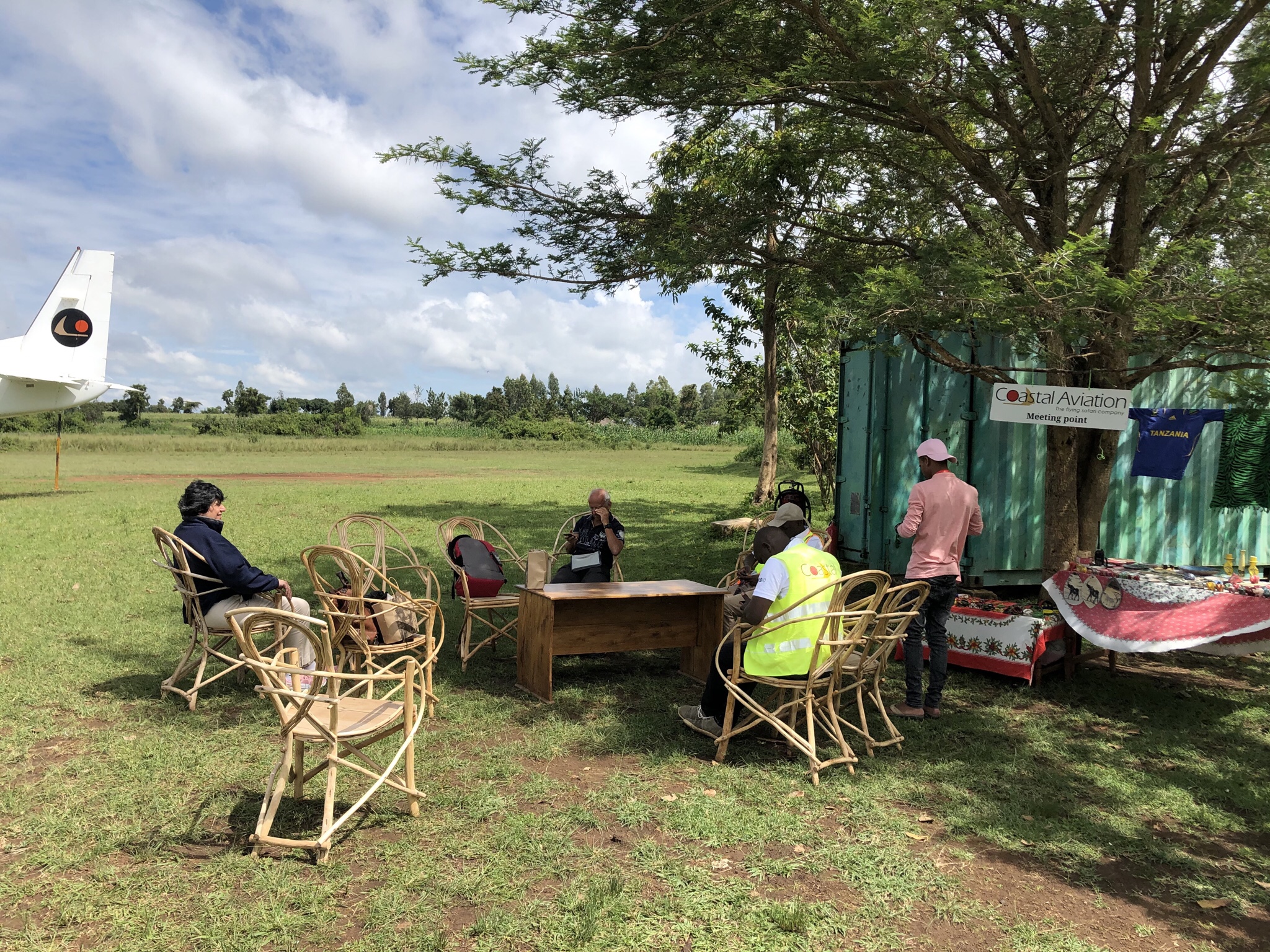
We drove down to the airstrip to await our next flight . We were told that there was nothing left of the carcass of the giant eland ! All the scavengers had finished it .
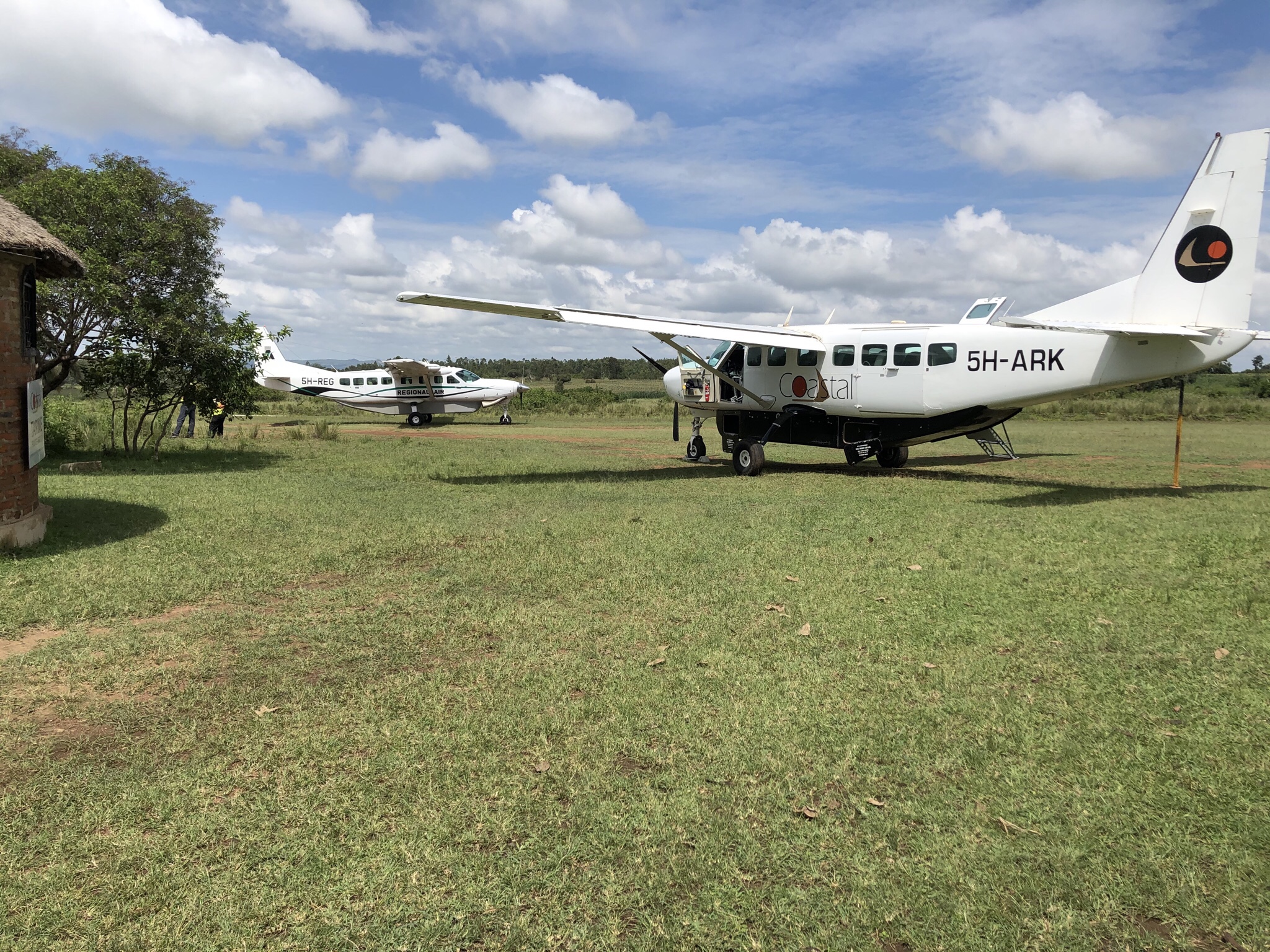
Our next flight was in a Cessna Caravan with another two ladies and two pilots . We were soon off on our next adventure . We flew low watching game below including lions , ostriches , antelopes , buffaloes and elephants from the air .it was just a beautiful morning . We landed after 10 minutes at another airstrip in the Mara area ( there are 5 such airstrips in this vast sprawling game reserve) and again we took off . After half an hour of an uneventful flight , over the escarpments we started flying over inhabited areas . Small farms with maize growing and circular Kraals and iron sheeted houses were the norm , dotted amongst a green highlands .
We flew into an airstrip , half paved with rubble , in the middle of nowhere in a town called Migongo near the Kenya Tanzania border. We were then escorted into a bus and our passports and yellow fever certificates checked and given forms duly to be filled out . We drive through the country side- farm lands , and then through the town of Migongo which was full of small repair shops and booze shops . Amongst the shops Indian owned ones , Bhagwanti stores ! At several places a Sunday market was happening . We then went to the town of Isanbaniya which was the border town with Tanzania . Got off the bus and got our passports exit stamped at. Passport checkpoint and then were driven across the border crossing gate . There was heavy security at the gate and then once more into passport controls on the Tanzanian side . Our evisa were checked as well as a health check with our temperatures taken with a handheld device and our yellow fever certificates checked . Passport formalities was facilitated by a guy called Tommy who was helpful .
Then along with a Swiss couple we were driven out for our next flight !
Once we departed from the Tanzanian border town ( the Kenyan and Tanzanian border towns looked a lot like true poorer versions of in parts of our country .. but quite green with bougainvilleas and hibiscus and palm trees along with sausage and acacia trees . ), we were asked stop at what looked like a customs check about a few miles from the town . Couple of resplendently clad white suites officials with two gunmen on either side waved us through and we immediately drove off into a dirt track ! We were worried we were been hijacked but after another mile or so we got to our airfield which was dirt strip in middle of green fields of corn . We watched a couple of Crowned Cranes daintily walk around the airstrip with an air of. Government inspectors out auditing . We exchanged desultory notes on the Economy , taxes and political system of Switzerland and India , with the middle aged Swiss couple .
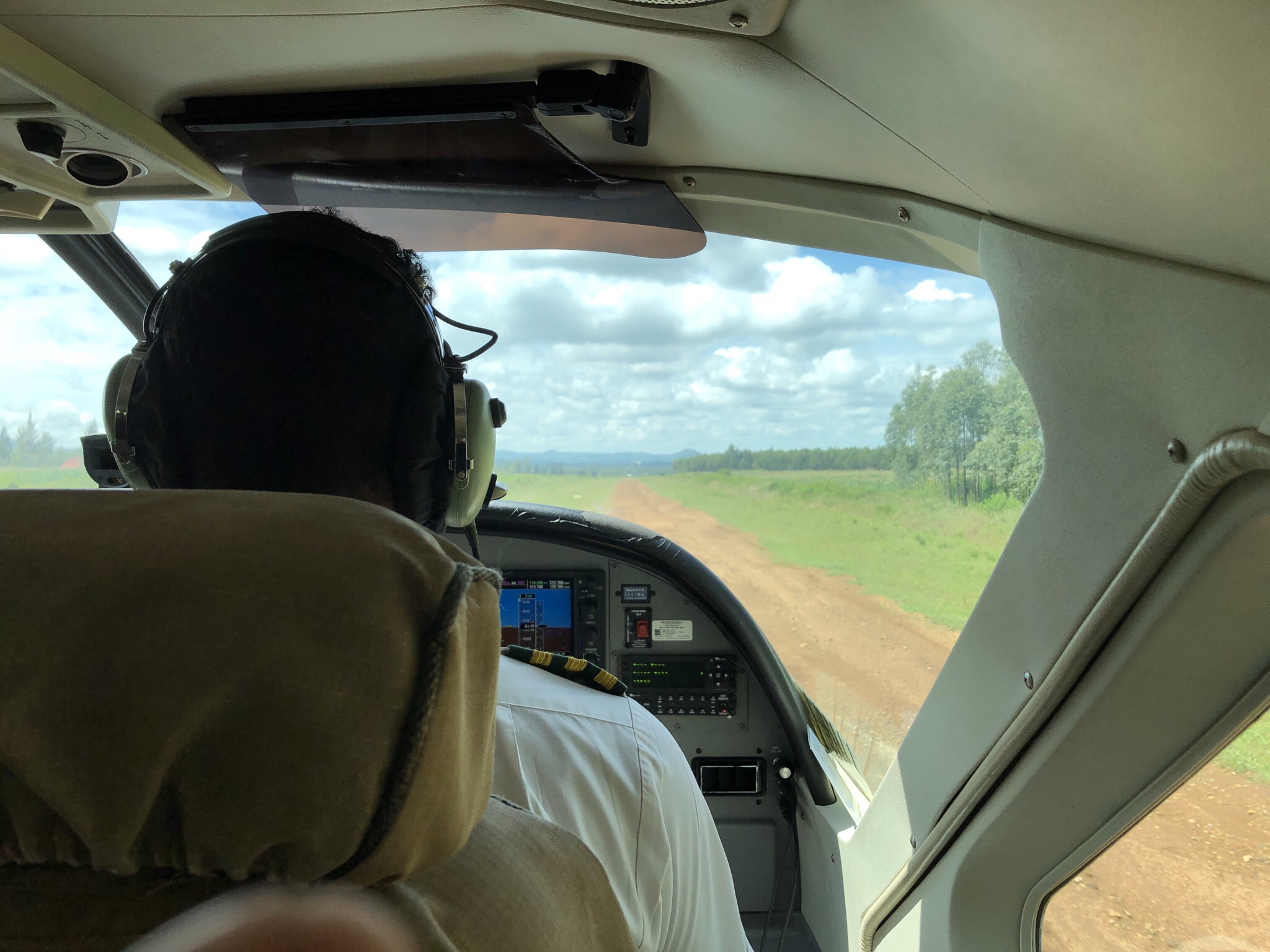
Our next flight was a Cessna caravan again bound for Serengeti , piloted by two expert pilots Mohammed and Abdul .
This time we flew quite high and after a forty five minute flight we landed at a quite busy little airport called Seronera airstrip in the Central Serengeti plains .
We were met by our guide for the next three days Daniel ! Daniel turned out be an affable young Man from the Irak tribe , of Ethiopian descent , tall with a broad forehead and a long nose, a handsome looking young man of grave mien with a delightful accent . He was most delighted to learn that we were interested in birds !
We decided that we would spend the entire day game viewing and bird watching and that proved to be a delightful decision as we had a packed lunch with us .
After a cup of coffee laced with Amarula , we passed the main gate and instantly our game viewing and bird watching started . We saw a Superb Starling and a Hildenbrands starling at really close range.
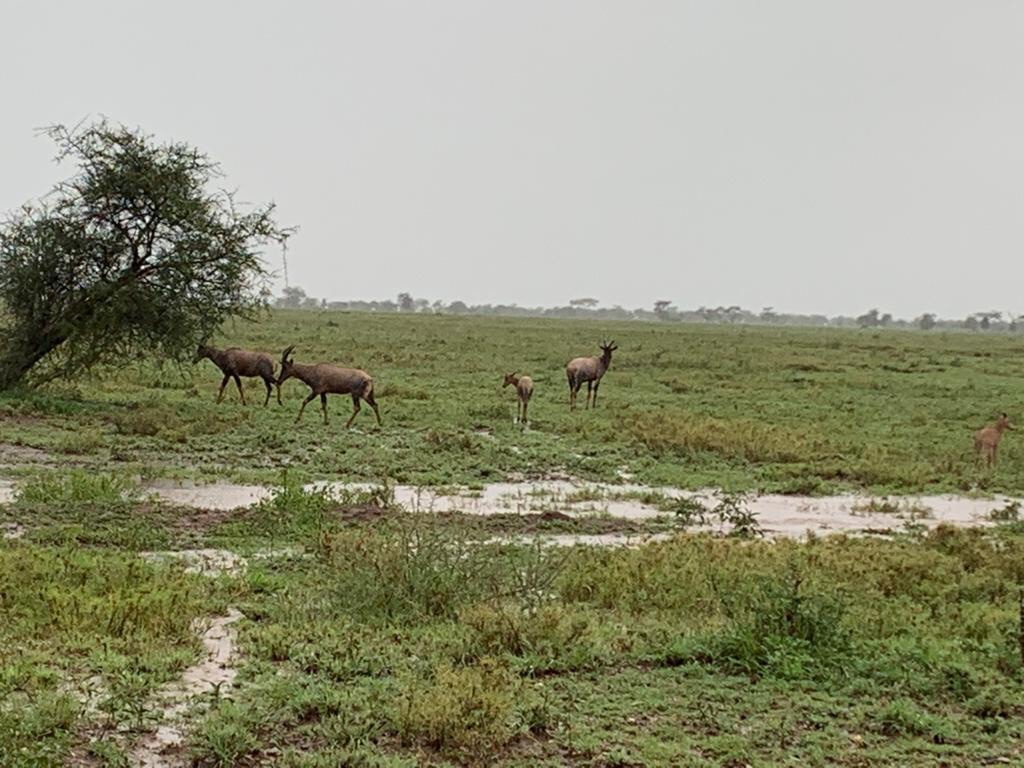
As went down the quite busy dirt/ red mud kutccha road which was actually a highway , were Impalas , Topi and Harbeestes in abundance on either side of the road . A Secretary bird , prancing around , looked like an old world amanuensis , with its quill like tuft if head feathers and long legs , all ready for a dictation . The name is actually a misnomer and the word Secretary in Arabic meant a hunter .
With red eyes , a long tuft and spindly yellow feet , it presented an arresting sight as it hunted for small insects and snakes in the grassland. They actually stomp on snakes to kill them and then eat them !
We came across a water body lined with reeds and myriad birds – African moorhens , black crakes , egrets , crowned lapwings, and coppersmith plovers , various reed birds and Reedbuck apart from a wallowing hippo. The sky darkened with clouds .
Further on we came across a couple of sleeping Cheetahs In a bush barely visible in the long grass .
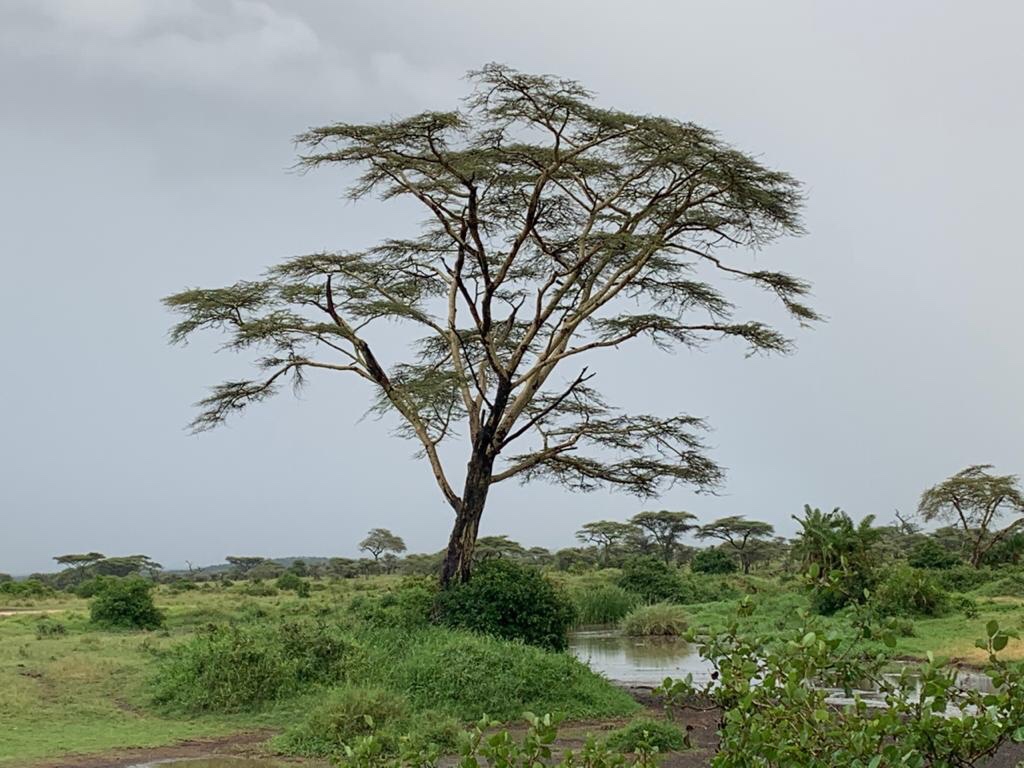
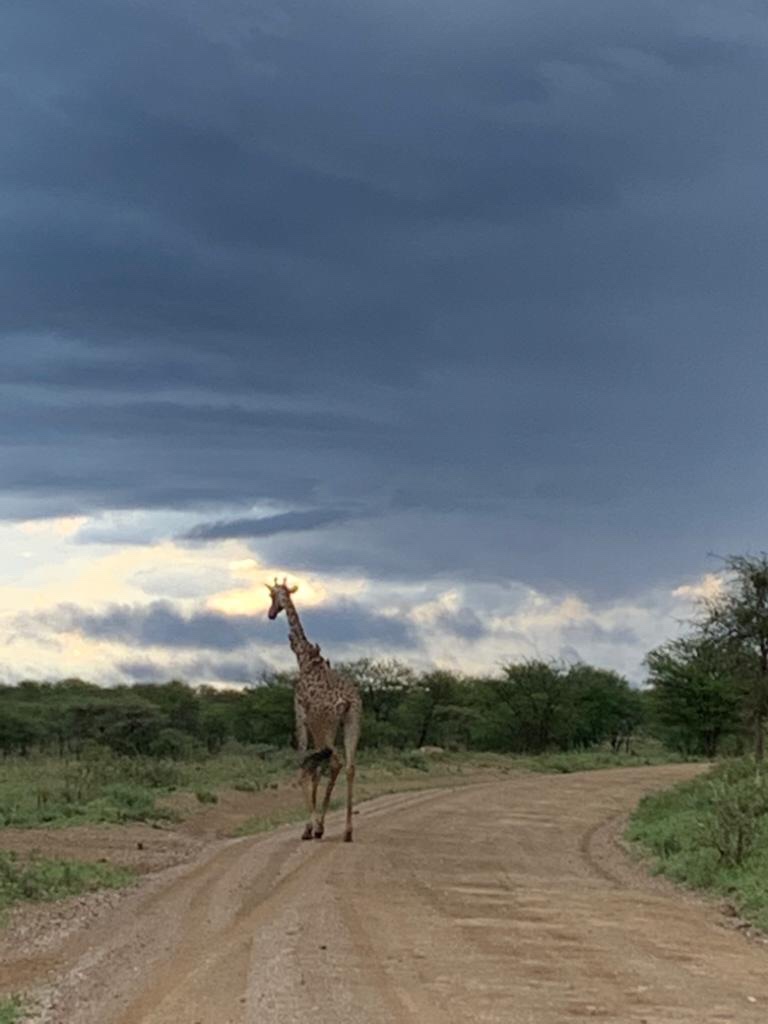
The Serengeti grasslands spread far and wide , with gentle rolling hills in the distance and dotted with thorn trees. Giraffes cropped topiary of the acacia and sausage trees are the iconic feature of these plains . It is meant for the the Cheetah to run and the lions to hunt . But it all is about who sees whom first !
Mostly Dirt roads and sometimes muddy tracks full of potholes , where only four wheel land cruisers can go , criss cross the central plains . There are small streams flowing down from the hills with date palm trees and African palm trees dot the landscape along with the ubiquitous singular looking wide spreading acacia trees . It was surprising how much game could hide in these wide open plains , blending in so well with the landscape .
After driving around for two hours , past hippo pools , antelope and zebra herds , we encountered small bunches of the great migration of Wildebeests , African Buffalos and Plains zebras .
We stopped to have lunch at a pleasant picnic spot which had proper toilets . All the trees had weaver bird nests of different kinds – sociable and the buffalo weaver and the beautiful yellow lesser masked weavers . These little birds were bold and inquisitive and had got used to having tidbits from various lunch boxes . The picnic spot , set up on a hilly outcrop , beneath a few spreading trees , was an idyllic spot to have a picnic .
We had a nice lunch of Indian bread , strips of beef and a salad washed down with a cold coke brought out from Daniels cold refrigerator fitted into the land cruiser .
The land cruiser had two sun roofs and ample space inside and even plug points to charge your cameras and phones on the go !
Soon after as as the sky darkened with rolling black clouds , with rain in the air and the atmosphere crackling with latent electricity , we set out to look for leopards.
Soon thereafter Daniel told us that there was large male leopard hiding in a hillock which had proved to be quite shy . When we came across the hillock , we searched for the leopard in vain . However we could make out was hidden amongst the rocks , because a magpie shrike has detected the leopard and was busy scolding it with loud cries !
But the leopard just would not come out . A baby Wildebeest which looked quite ill and had been left behind by its herd , wandered around in small circles nearby, disoriented and weak from hunger and possibly disease . It looked very vulnerable , tired and in torment , possibly waiting for a mercy death . We guessed that the leopard must have spotted the Gnu but just did not want show itself to us .
As we waited we suddenly spotted a huge owl sitting in a tree which turned out to be rare Spotted Eagle Owl . A beautiful handsome bird with barring on its front chest , it made Huvida very happy .
After waiting in vain , for the leopard to come out and put the baby Wildebeest out of its misery , we decided that we would carry on and go after other animals as the leopard showed no signs of emerging .
A little later , we spotted two lions sleeping and surrounded by Safari vehicles . Given that they were sleeping ( Lions are known to sleep for 18 hours at a time ) we left them and proceeded further .
By this time the sky had darkened considerably and rain was coming , we tried to glimpse two leopards sleeping in the crook of large tree with spreading branches . The leopards paid no attention to the Safari vehicles and kept snoozing !
The rain finally arrived and we had to put down our sunroof . But even in the driving rain , we kept on the lookout for animals and were rewarded with the sight of shy leopard hiding amongst the bushes . The large male leopard was very aware of us and tried its best to elude us be keeping still, creeping low and then slowly moving forward . At one point Daniel whose eagle eye had spotted it , drove up to the tree where the leopard was hiding , within ten feet of us before he realized that he was spotted and sprinted off in the driving rain . After playing hide and seek with us for some more time , the leopard finally looked off into the plains and was lost from view. It was a memorable wonderful sighting .
The rain relented around four in the afternoon and we started on the way back to our camp after further sightings of giraffes , impalas , Hartebeeste and Topi’s .
It was also a day on which we learnt about African birds and animal life in such a beautiful manner from Daniel . He was a walking , talking encyclopedia on birds and animal behavior ! I think because of our interest in birds , it gave him an incentive to renew his knowledge by explaining and referencing . Hence we were much slower than many other safari vehicles across the plains that we encountered . Apart from the mobile radio with which the guides exchanged information , whenever two vehicles met each other , the drivers would exchange tips as to where and how animals had been spotted, as a regular matter of courtesy and custom . This we saw happen again and again . But we think we soon developed a reputation of those mad slow people who were spending their time on inconsequential things such as birds and small mammals and insects !
In fact , this really helped us as we would often spot the big game or predators, which other tourists were searching for , precisely because we were tarrying and taking our time to see things and photograph them .
We were very lucky to have Danielas a guide . He proved to be an able , skillful, knowledgeable and unfailingly courteous gentleman with a gentle sense of humor, who never hurried us and explained over and over against answered whatever stupid questions we posed !
He explained the subtle difference between a Tawny Eagle and a Steppe Eagle ( by the length of their yellow ‘ gape ‘ beneath their eyes ) , a Superb starling and a Hildenbrands Starling , a red billed oxpecker and a yellow billed oxpecker ( differences of geography ) , the myriad weavers .. black lored weaver , masked weavers and buffalo weavers , the beautiful African fish Eagle fishing for catfish , the arresting looking wonderful Verraux Eagle Owl and the Striped Eagle Owl ( the Verraux had pink eyelids ! ) . He was treasure trove of animal lore and factoids .. pointing out a Vervet Monkey with blue testicles , (yes that’s correct blue balls ), which was a sign that it was the dominant male in the troop .
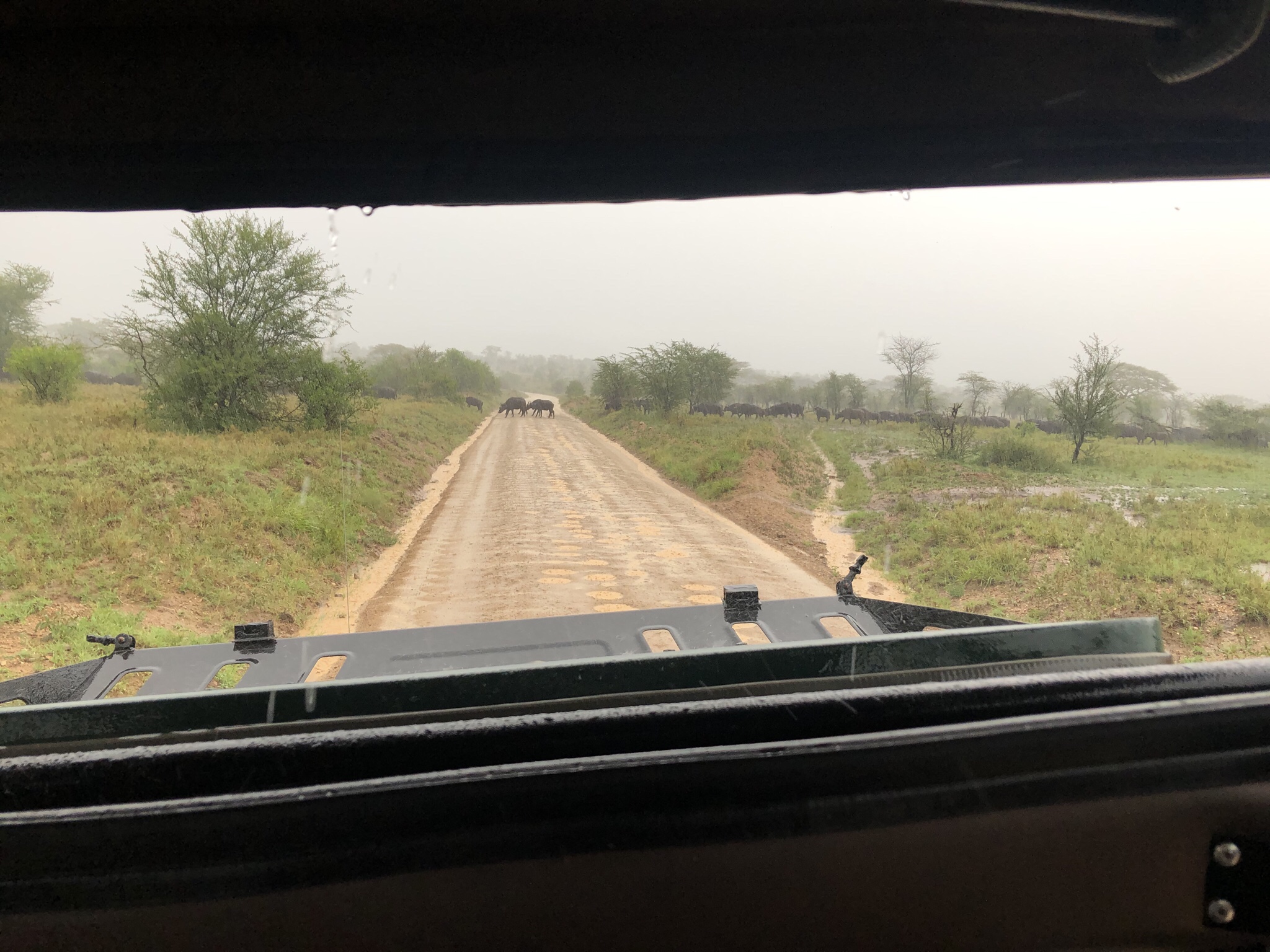
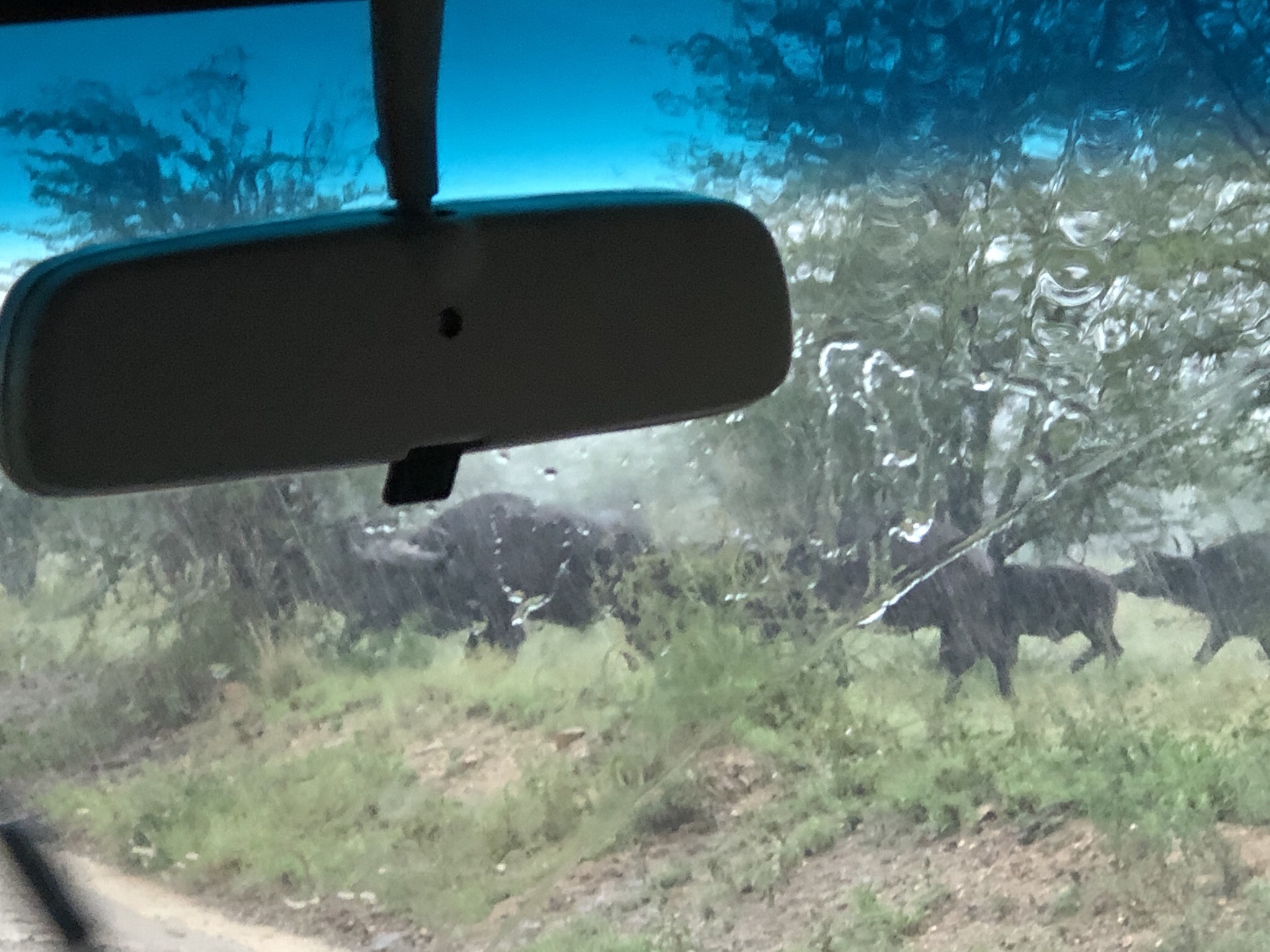
We were an hour away from the camp , when I opined that the buffaloes seemed to be scarce in these parts of Serengeti , when suddenly a huge huge herd of African buffaloes descended on us . An endless line of huge Daga battle scarred bulls , females and calves went thundering past us in an endless line . Must have a been a herd of over 500 animals , possibly more, moving en masse in the mysterious rhythms of the great migration. It was breathtaking to behold the tumult , hear the noise and see the clouds of dust . Most of the African buffaloes gave us scant attention The huge buffalos which served as the advanced guards of the herd, however looked at us with evil intent . I certainly would not have liked to meet them on foot .
Daniel told us that they were unpredictable in their behavior , often froze and hid in bushes and charged from their hiding place at close range . They have a habit of going away and coming back to inspect once curiosity got them better of them . Stories of them charging hunters or people on foot when startled are galore .They have a reputation for a nasty temper and great courage against odds .
No sooner had we seen the buffaloes , we heard even more commotion and suddenly across the road the Great Migration !
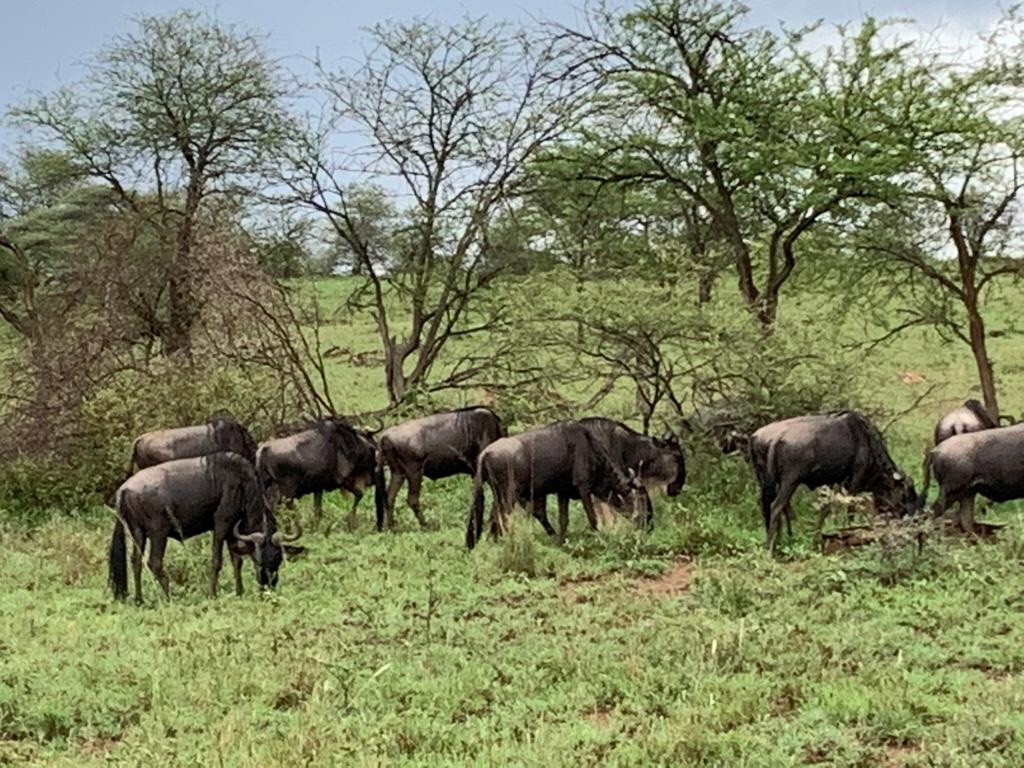
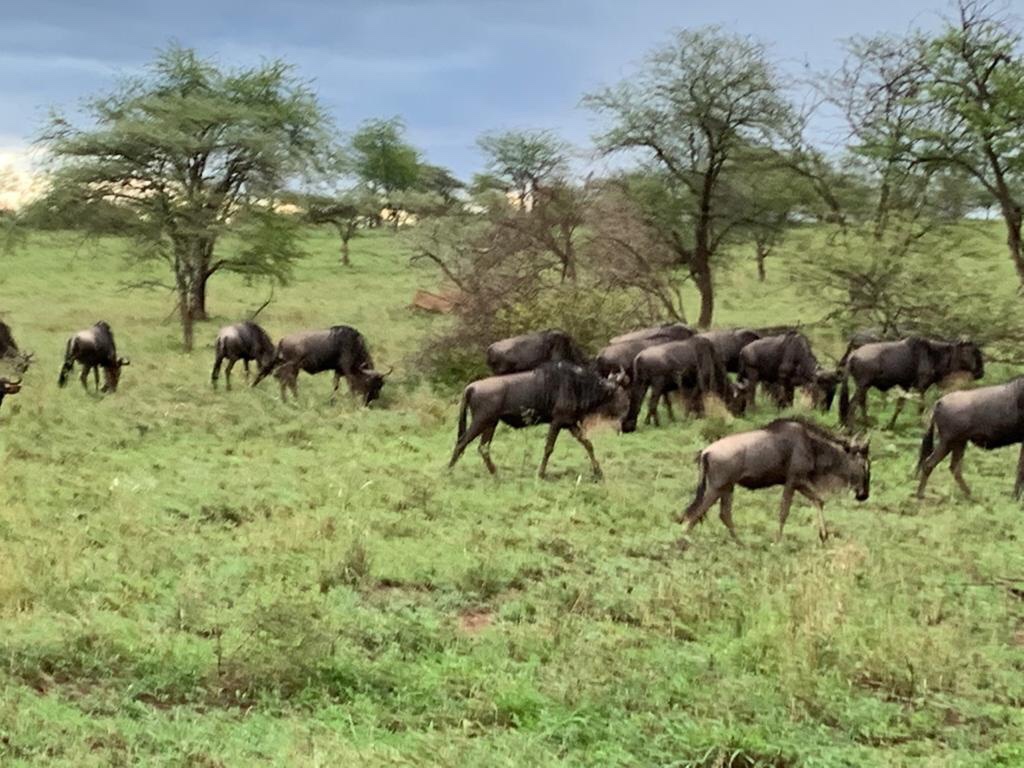
An endless line of the Western White Bearded Wildebeests , moved along , in immense numbers , the line seemingly unending . A grey blue burst of color , dust accompanied by indescribable noise of many hooves beating down , the heavy grunts , walking , sometimes running for no discernible reason , they fulfilled and then some , all our imaginings . They walked in a single file with great but obscure purpose of which only they seemed to know , moving to a rhythm unchanged over a millennia , responding to nature’s signals . It was an amazing , moving and unforgettable sight .
According to Daniel , they migrated to different parts of Serengeti and by this time of the year having returned from the Mara ,were in the central plains , looking for fresh grass in the short rains . The mothers would shortly give birth to many calves .
These most unlikely looking beasts , are almost comical to behold look like that they have been put together form left over designs of other animals , when god created them : A dark bearded visage like that of a lion , topped with two sharp curved horns , high hunched front legs, short hind legs which make for an ungainly gait , a stocky body , with :a shining coat , blue black in color , which when multiple wildebeeste ran , make it difficult for predators to pick an individual . A long tufted tail completed the ensemble.
Yet these creatures take part in an epic journey of mass migration across hundreds of miles , only to break up into smaller bunches and then come back together again in huge herds of thousands mixed together with plains zebras . They travel through territories of lions , leopards , leaping across rivers infested with huge Nile crocodiles and hippos. They are absolutely unique and in spite of Man’s arrival , and his depredations , reducing their territory and their numbers , have been embarking on this epic journey for eons !
They follow the rains and can smell the chemicals released when rain hits the hot earth from as far as thirty miles and follow the rain in an endless ceaseless cycle . It truly is one of the natures greatest phenomenons . We were indeed privileged to have seen it .
A little while later we reached our camp after crossing a small bridge .
Serengeti under the canvas is a moveable camp , which moves into these parts of the Serengeti at this time in order to keep up with the migration . The camp has been set up for a
month and they had displaced a pride of lions from their quarters when they arrived we learnt later . Just that morning the Migration had passed the camp very close by . The signs were there to see .
We reached the camp to be greeted by the entire camp welcoming us with a bold rendition of Hakkunah Matata accompanied by handclaps and whistles! After a warm welcome we were introduced to our butler Enok and the camp manager . The camp itself was on a long stretch of grass interspersed with acacia trees and consisted of ten luxury tents . We were at tent number one while an equal number of tents housed the staff , and the main kitchen . The reception consisted of a large tent set up with carpets and sofas to sink in , low tables with candles and books and a large bar . There was a charging station where one could charge ones phones and cameras . The other large tent was the restaurant space . A camp fire place for a communal bonfire on the grass outside completed the picture .
We were escorted to our tent by Enok , with his warning ringing in our ears about not stepping outside by ourselves unescorted because there was no fence around the camp .
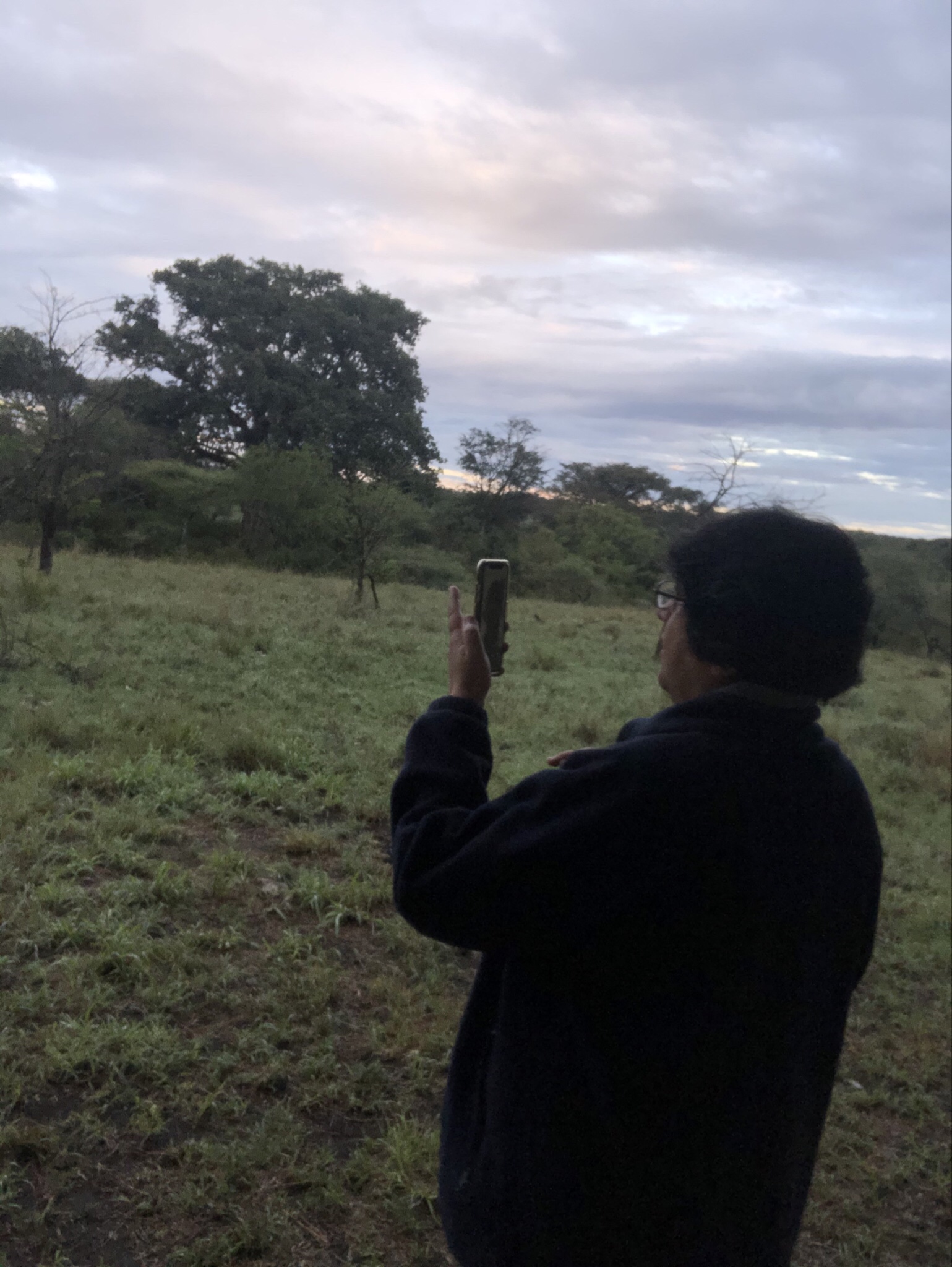
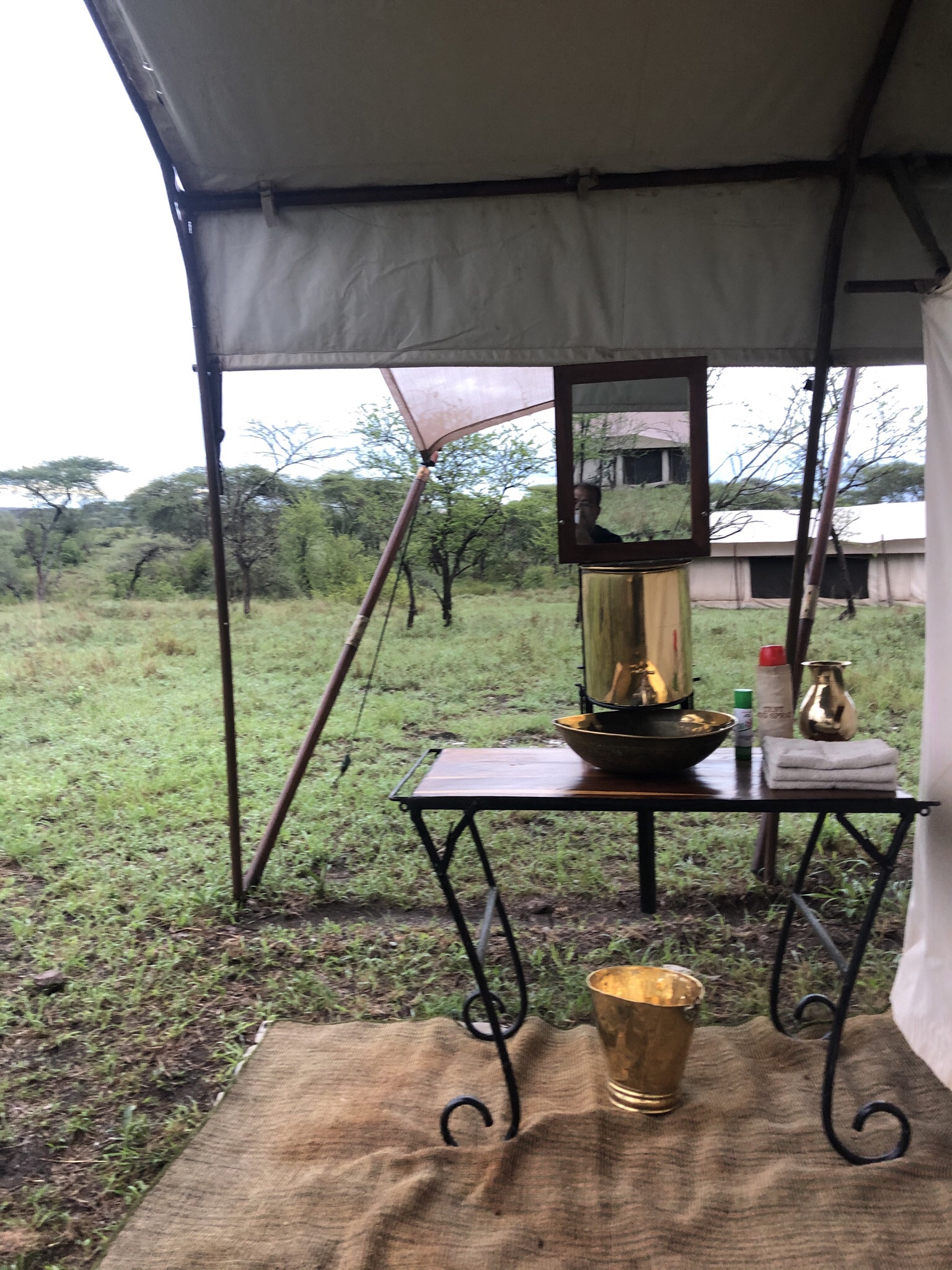
Our large tent had a copper basin for hand washing , set just outside the main flaps but under the awning and two easy chairs to relax in . It was situated on sloping grassy clearing close to a very large tree , some 50 meters away , along a decline in which there was a stream . We could hear a troop of noisy baboons having a right royal argument amongst themselves .
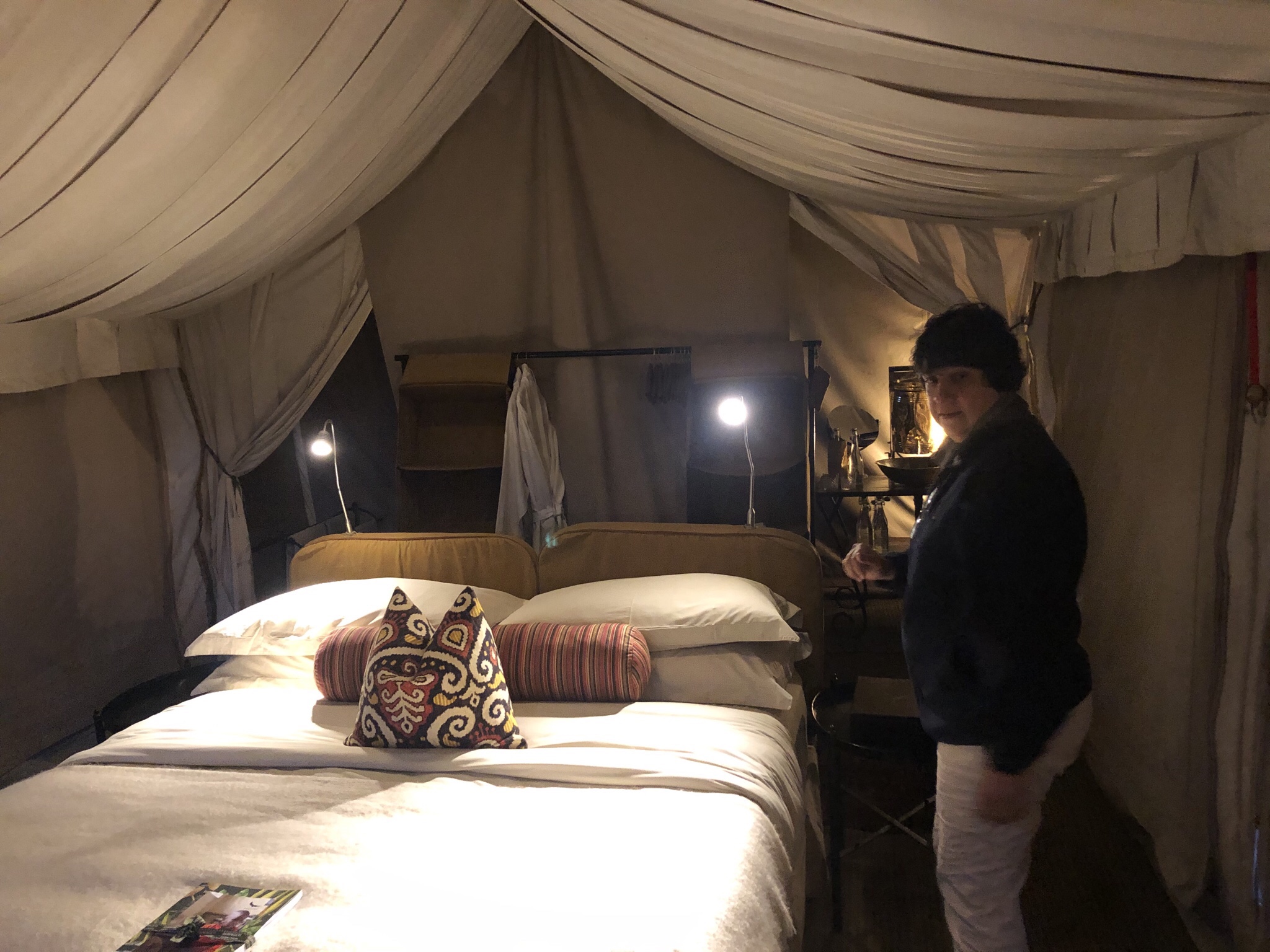
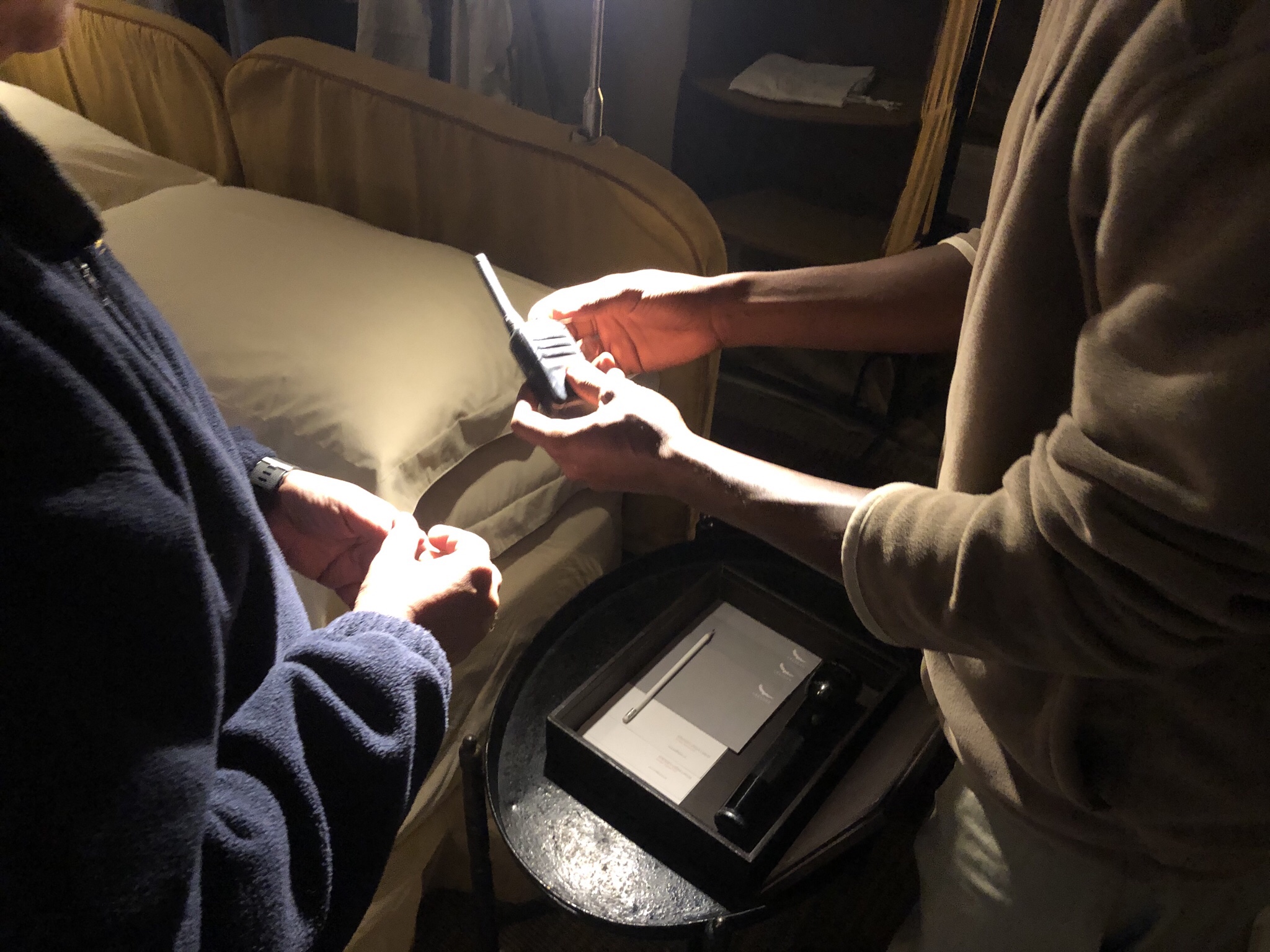
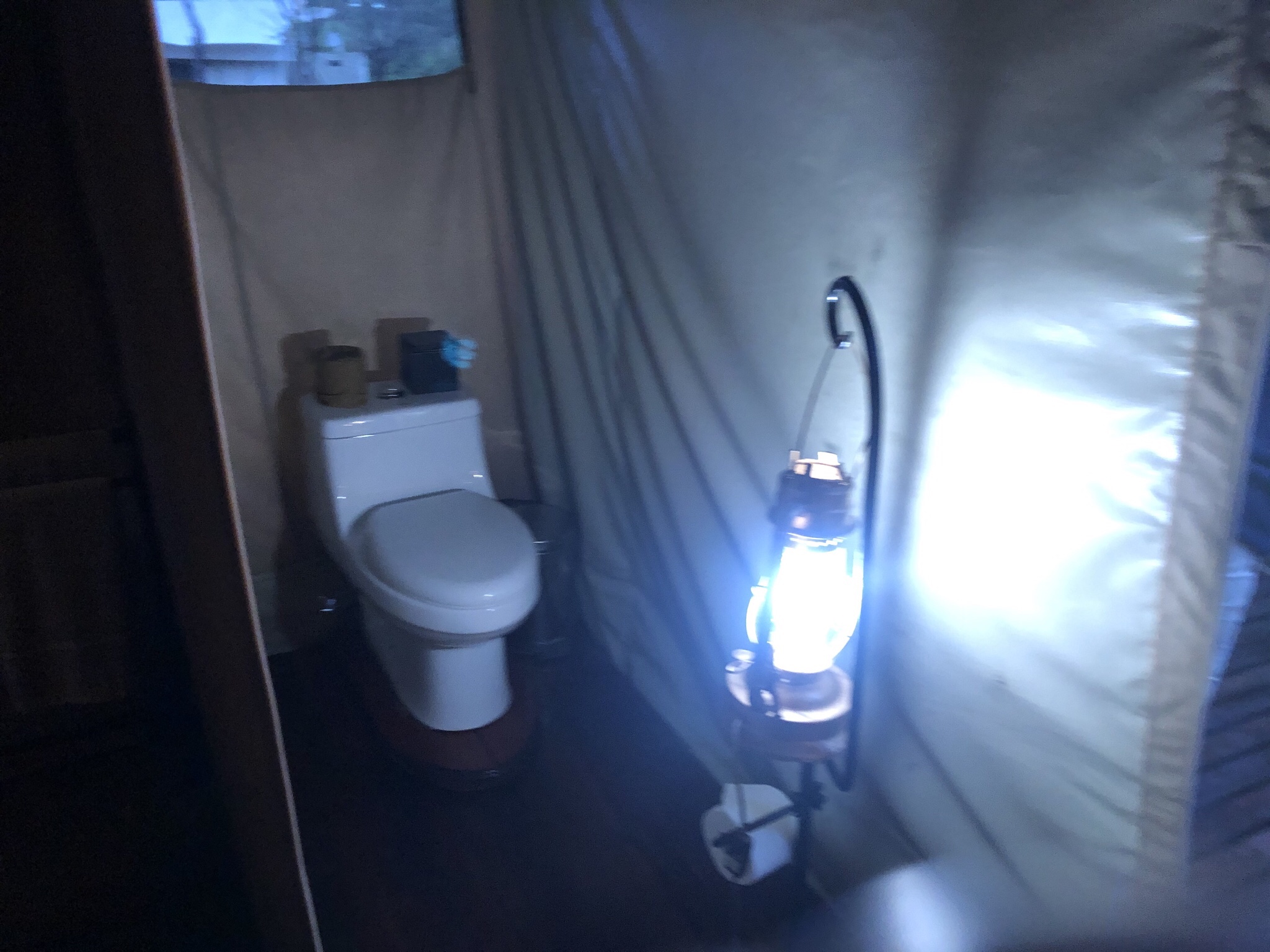
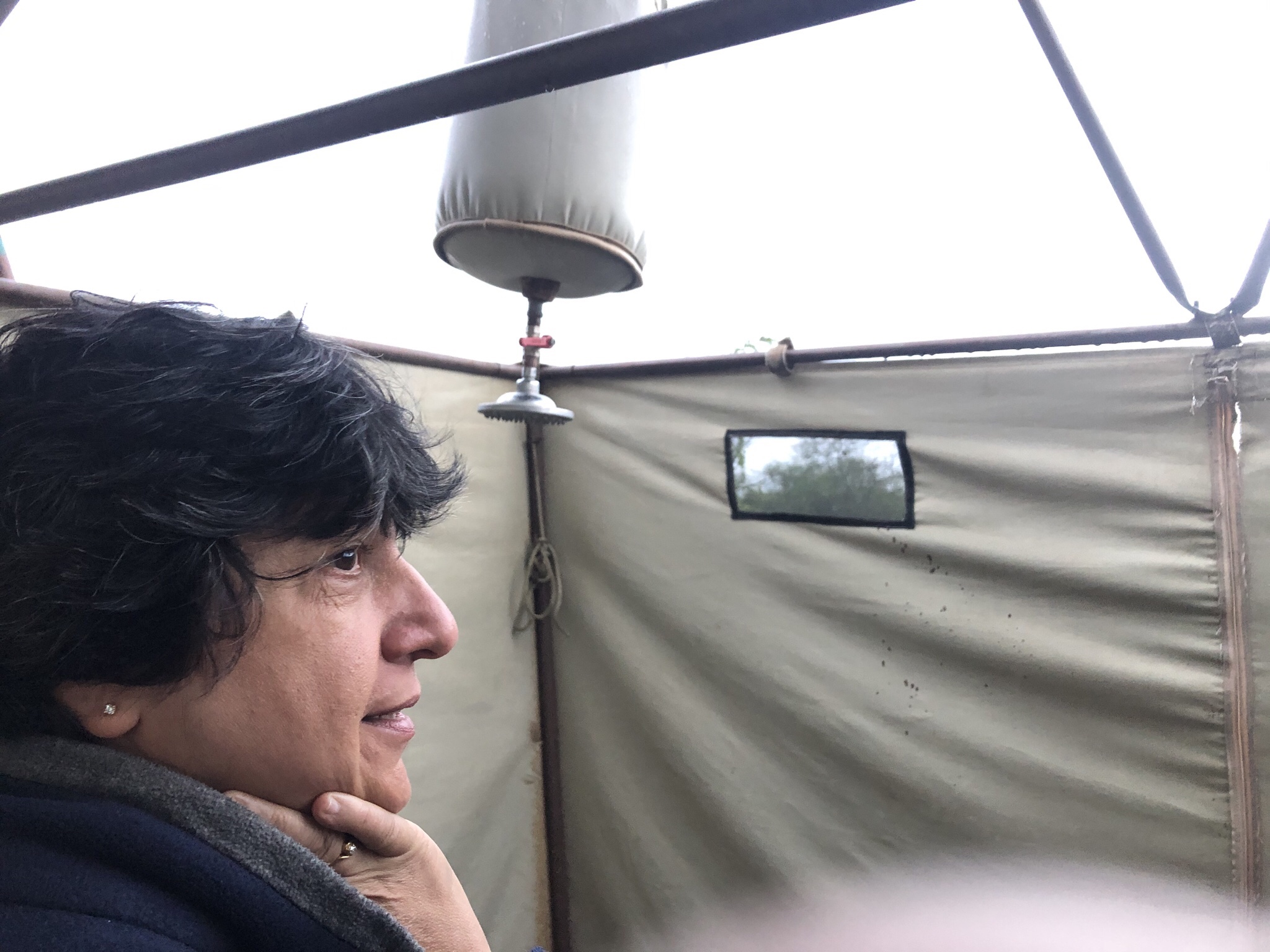
Inside the tent we had a wonderful large bed , copper bound wooden chests , carpeted floor , and plenty of space to arrange our luggage and hang out clothes . The wash area had a mirror and copper basin with water pouring into a beautiful brass urn , a commode over a wooden platform and a wonderful alfresco bathing area at the rear , open to the sky .
Enok produced two bucketfuls of hot water transported by means of a wheelbarrow . The smoky hot water which was hoisted into two canvas bags provided a hot shower that was an absolute delight .
For dinner we were escorted to the dining area , where we met other fellow travelers for drinks and exchanged shaggy dog tales and envious exchanged on who had seen what on their safaris .
After a couple of drinks ( me gin and tonic and Huvida a single Malt ) we settled down for dinner after having set up the next days program with Daniel .
Dinner was an excellent bell pepper soup and beefsteaks accompanied by fresh salad and beans and bread all produced miraculously in a kitchen tent close by and announced proudly by the Chef !
There was no bonfire that might . We soon repaired to our tents escorted by our butler Enok . We went to sleep to the sounds of hyenas laughing , baboons squabbling in the trees and later at night blood cuddling but thrilling sounds of lions roaring in the distance . A perfect end to a wonderful adventure !





Where and when to go ?
And others follow ?

What song sung blue
All gnus sning
Who knows
Where and why
Gnus gno

 Travels with Huvi et Tufan