21.11.2019 Serengeti Under the Canvas
Next morning we were up and about early . We put in a call by whatsapp back home ( the availability of WiFi I think was a boon for us ,given the old folks back at home ) , we set off in our next days explorations with Daniel , after having a superb breakfast of eggs , toast , African honey , marmalade , strawberry jam , and fruits , muesli , sausages and bacon and all washed down with smoky hot coffee . In the bush , everything tastes so much … well more tasty !!!
We barely had travelled more than 15 minutes from the tent when we stared seeing wonderful birds .many of these birds had such strange names .. the long claws , nicators and Fiscals . Their Barbets were totally different from ours . Very colorful like the Usambiro Barbet . the Kori bustards , white bellied bustards and black and white bustards were all to be found close to the camp .
The black and white bustard followed by the Kori bustard with its curious bobbing dance , were our first sightings of the morning and angered well for the day .
Many types of larks – rufous tailed , rufous naped , cisticolas – ranting cisticolas filled the morning air with bird song . Flapping larks rose up and down in their typical flight , flapping their wings in a noisy manner audible from a distance which was their way of attracting the opposite sex. Dark chanting Goshawks perched on top of acacia trees looking for prey and enjoying the morning light . Three Usambiro barbets perched together , as if they were three tenors at the La Scala , and lo and behold sure enough they commenced to sing their aria , taking up different parts with aplomb !
In the distance magnificent Batteleur eagles and Martial eagles battled for supremacy of the skies .
As we drove along we encountered herds of impalas and Hartebeeste . The Hartebeeste have an interesting long face and look as ungainly as their cousins the Wildebeest.
At a river crossing, there were myriad white rumped swallows flitting around a narrow bridge , with mud nests beneath . Desert Date trees and African palm trees made for bucolic surroundings . Swarms of beautiful butterflies floated around .
We sighted a rare pair of Rufous Rollers very pretty , quite different from the ubiquitous but equally beautiful lilac breasted rollers . We were very happy at spotting these migrants which we were told migrated from Europe through their winter .
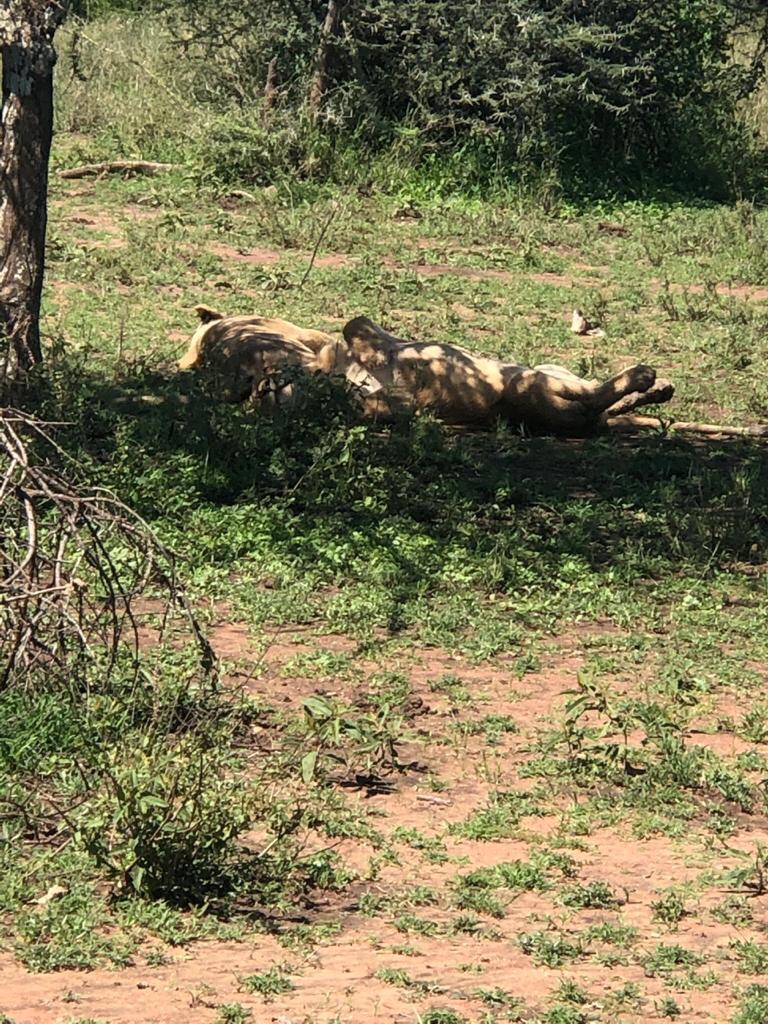
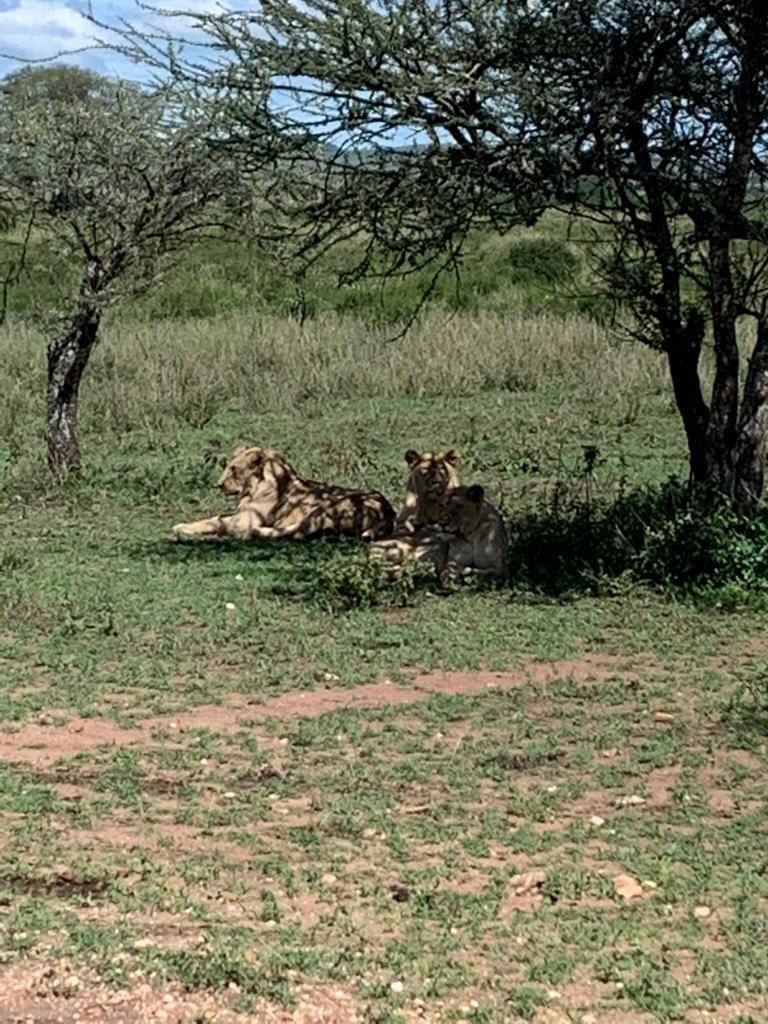
We soon started chasing a pride of lions next to a waterway after crossing over near what we had christened the Marabou tree which we had spied the day before . The Tree was actually a bare acacia tree in which dozens of Marabou stork nested quite near a hippo pool .
Presence of various vultures including the largest of them a Ruppells Griffon vulture and the smallest of them a Palm nut vulture indicated the presence of a kill .
We did not see any lions but instead saw a slender mongoose .
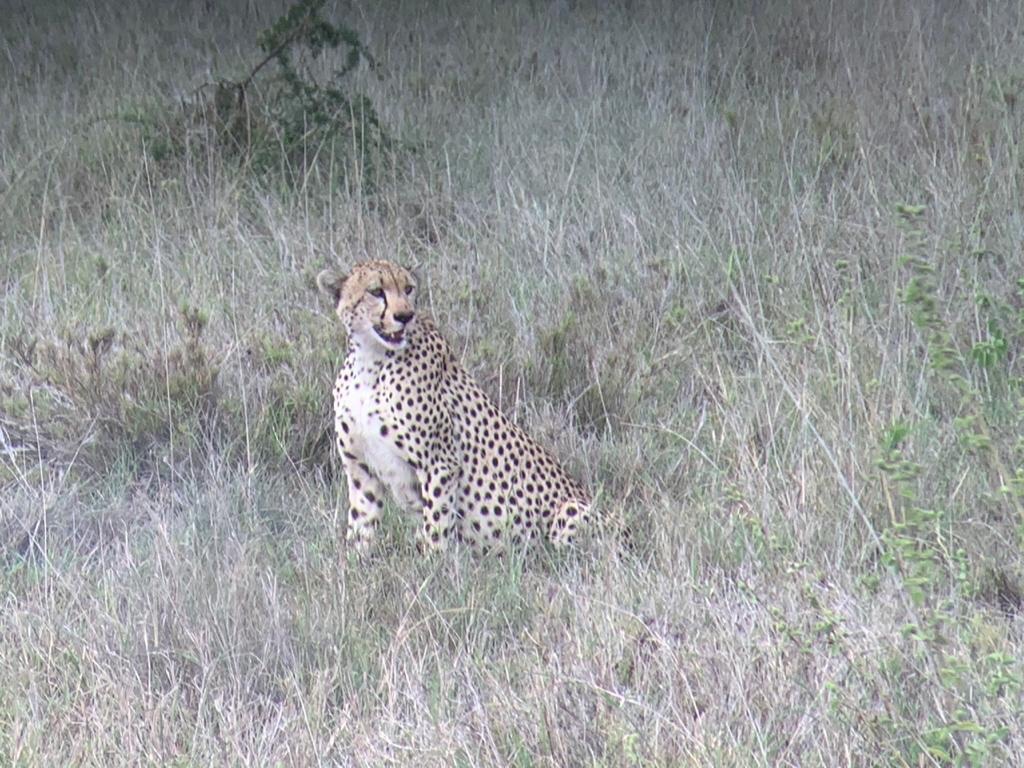
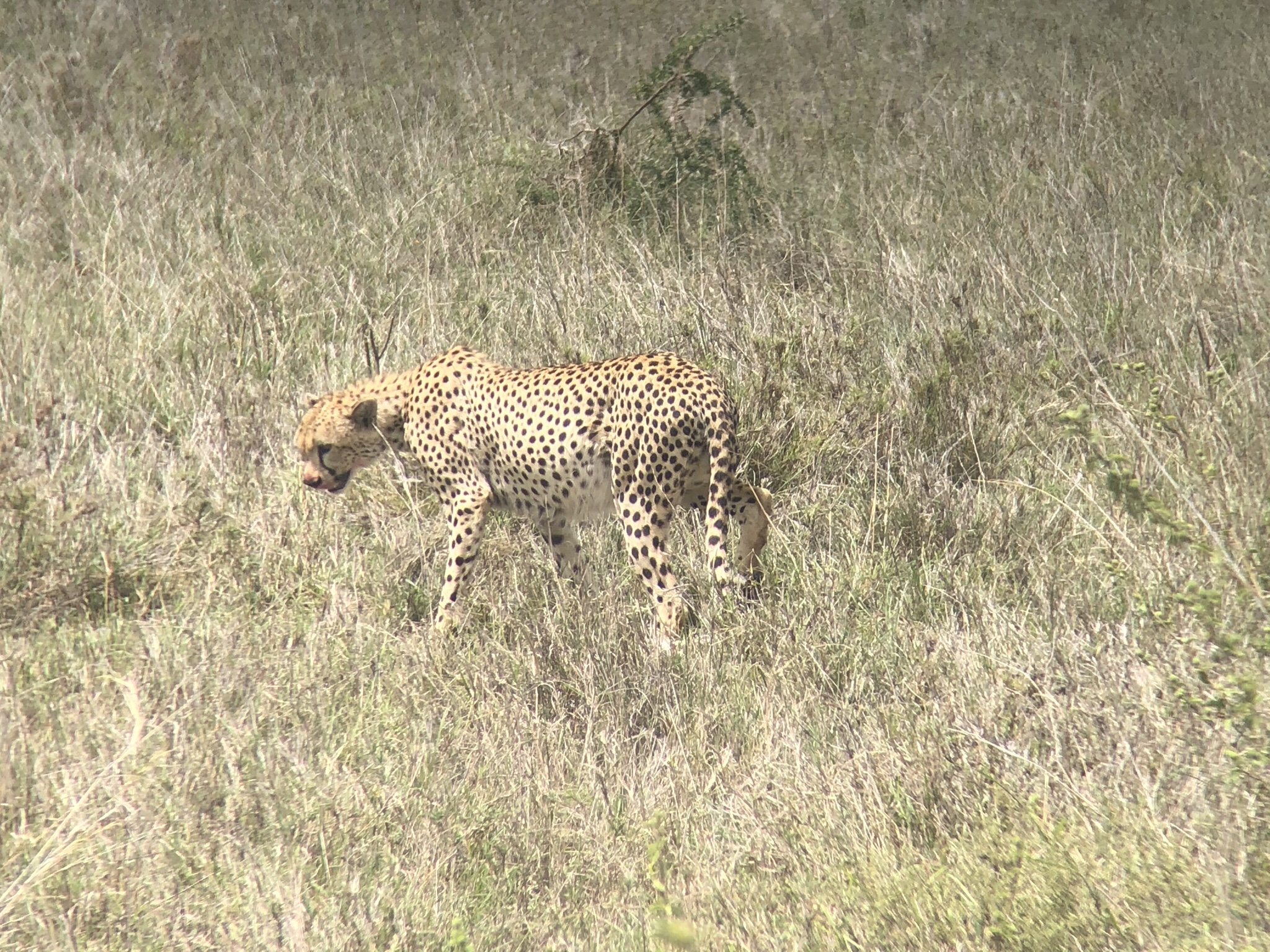
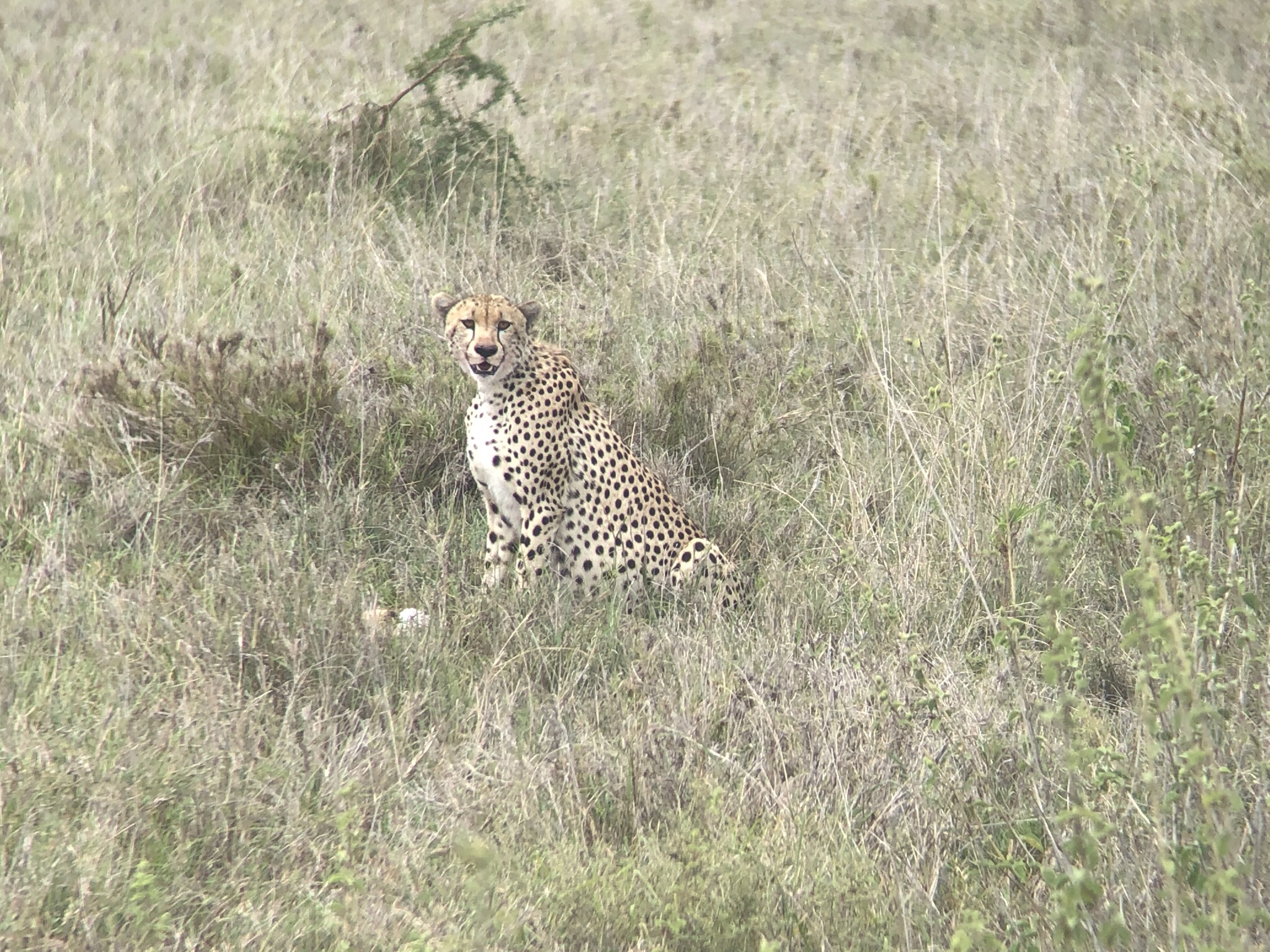
We then decided to track cheetahs and soon enough found two cheetahs hiding in a patch of grass . We could barely see the cheetahs , two brothers we were told , and given the crowd of vehicles lining up to see the Cheetahs , we left them alone a little disappointed . Little did we anticipate what was in store for us .
I had started dozing a bit , a bit of cat nap so to speak and Daniel was driving along an open grassy plain , busy spotting birds with Huvida , when suddenly he said in an urgent voice Cheetah !
Not only had he spotted a cheetah but one that was about launch into a hunt !
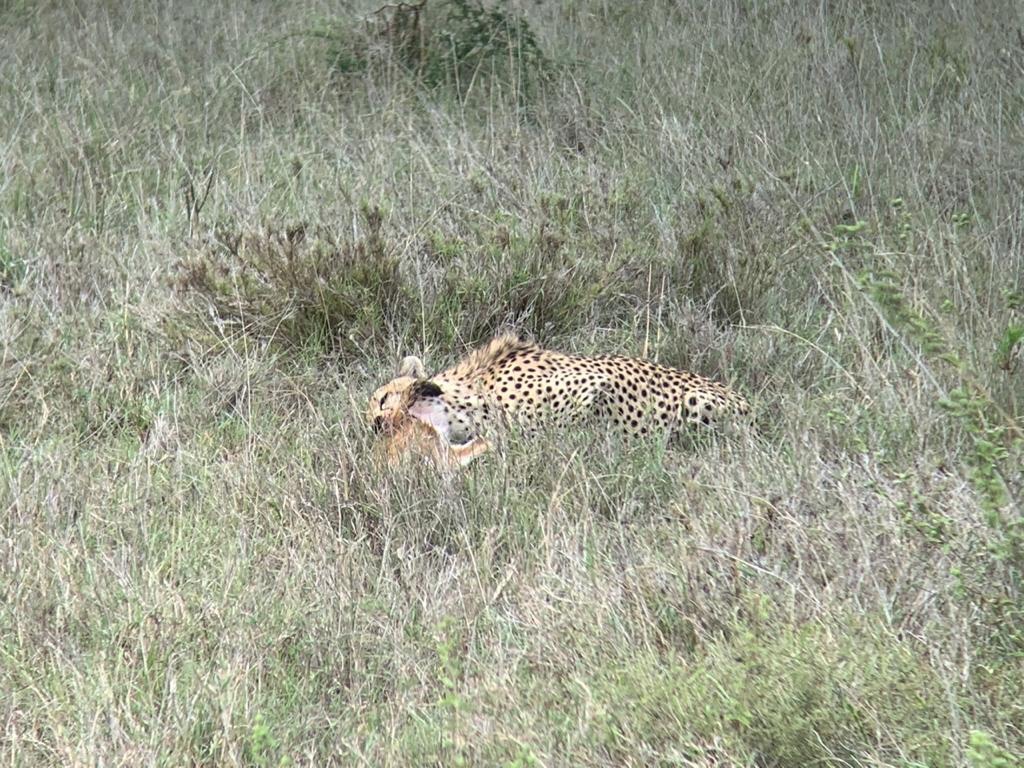
The Cheetah which has spotted a small herd of Thomson’s Gazelles in some distance got into a stealth mode and then soon launched into a full scale run.
It was just breathtaking to see ! A Cheetah in full flight after a gazelle is an iconic but rare sight .
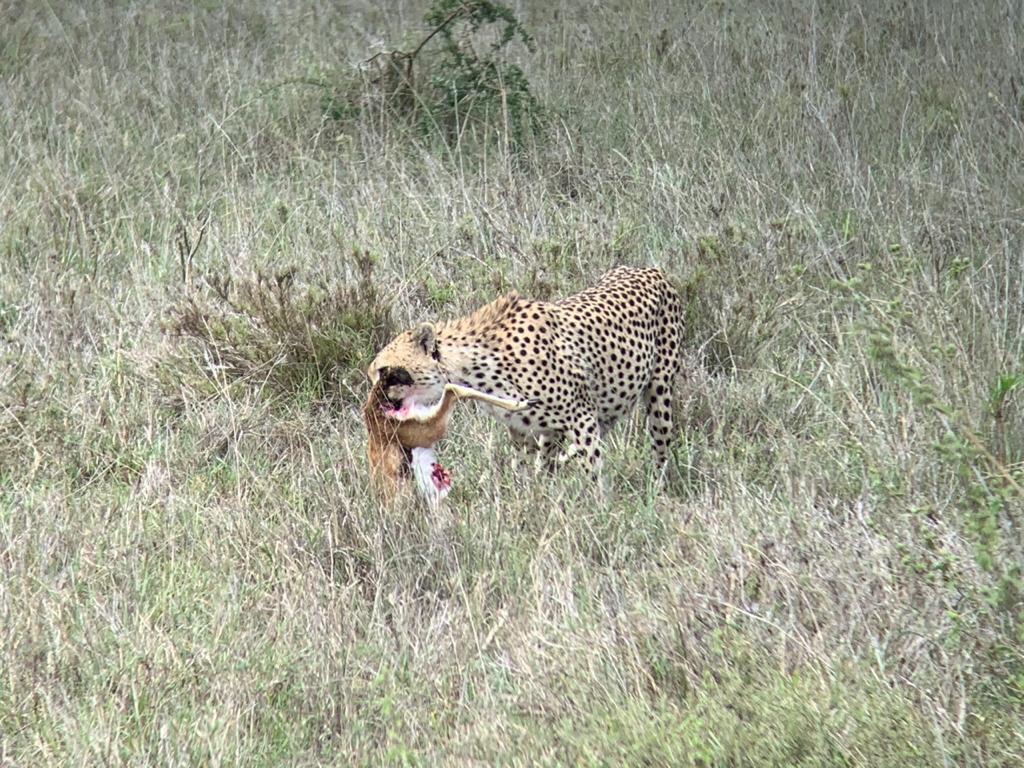
I and Huvida struggled with our cameras . It was just too fast . We first thought that the Cheetah had launched its attack too far back and no way he was going to be able to maintain its speed . The Cheetah had however set its sight on a baby Gazelle . The mother tried its best to distract the cheetah with a jinking run while the other gazelles scattered , but the Cheetah pounced in its victim and soon held aloft its trophy by its neck . Mercifully the killing was swift .
We had watched the action from a distance and then drove around to the Cheetah.
For the predator such as a Cheetah, this is often the time of greatest danger, as other predators such as lions and hyenas May chance upon them and chase the cheetah away and appropriate the kill.
The cheetah dragged the carcass some distance away and then proceeded to eat its kill straight away .
We watched in awe as the Cheetah, with nervous glances all around , settled down to eat with gusto . In short order , it had made quick meal of the baby gazelle . We watched from a safe distance and in a little while a few other vehicles turned up but they had all missed the main event !
This was an awesome unforgettable sighting !
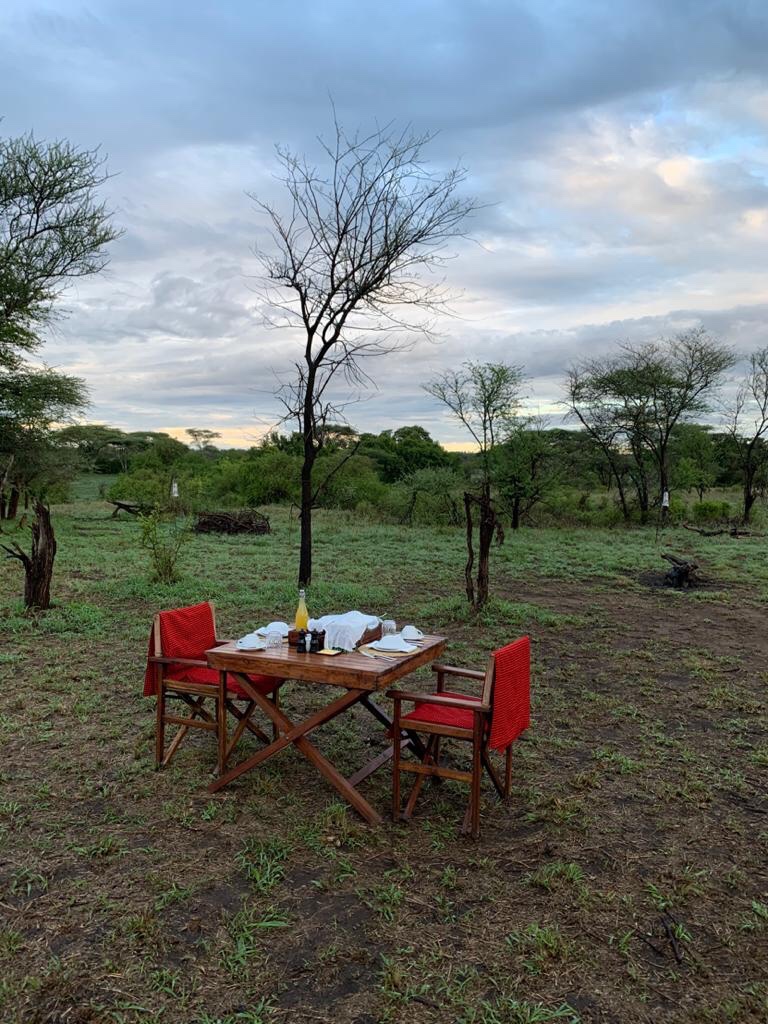
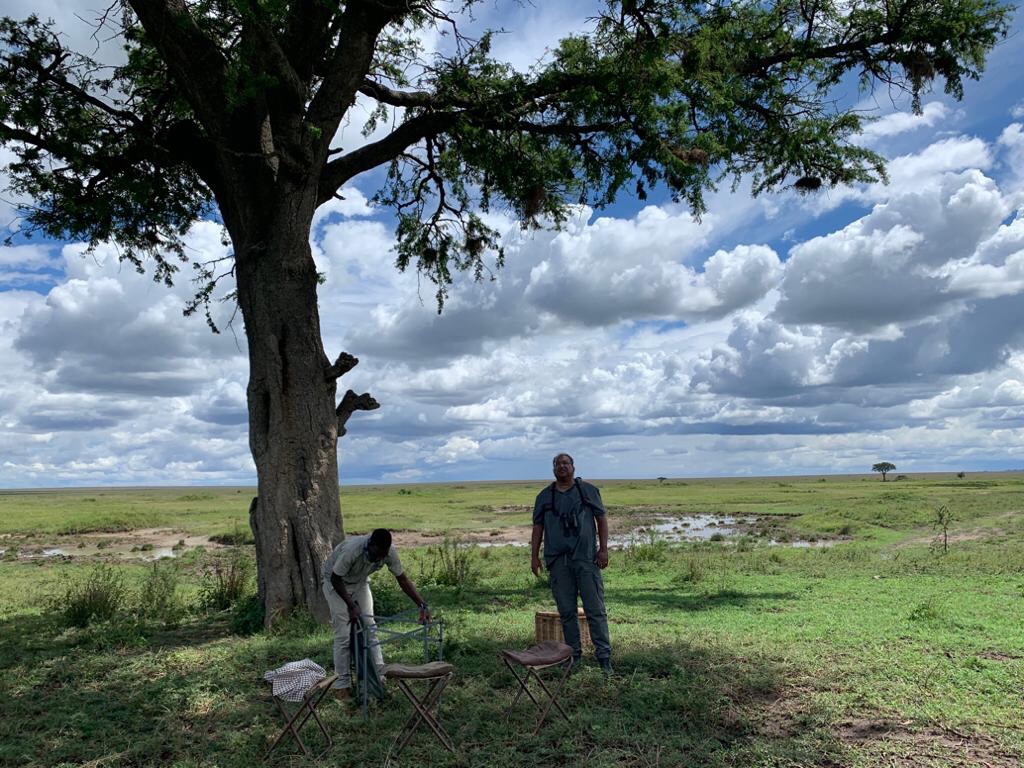
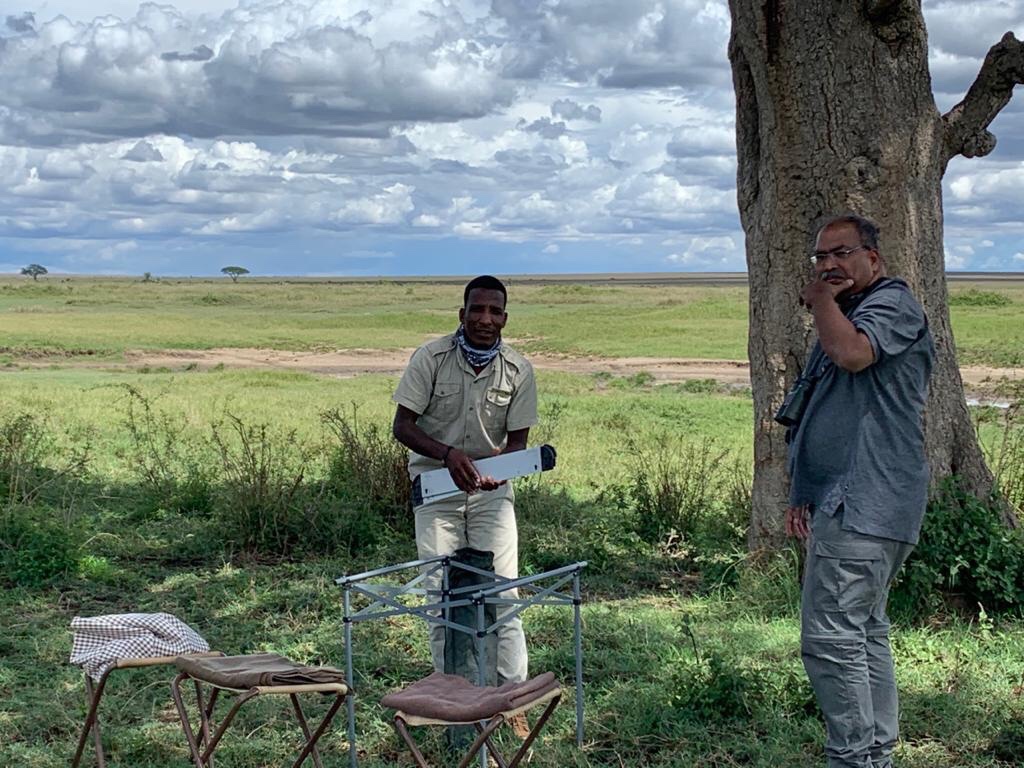
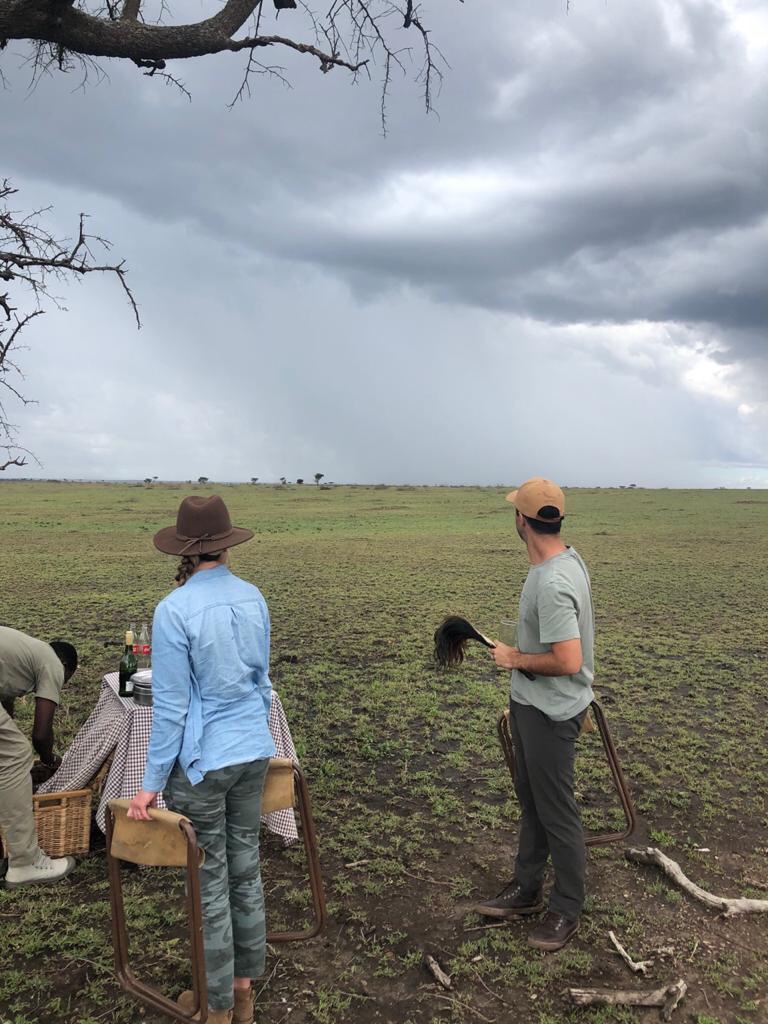
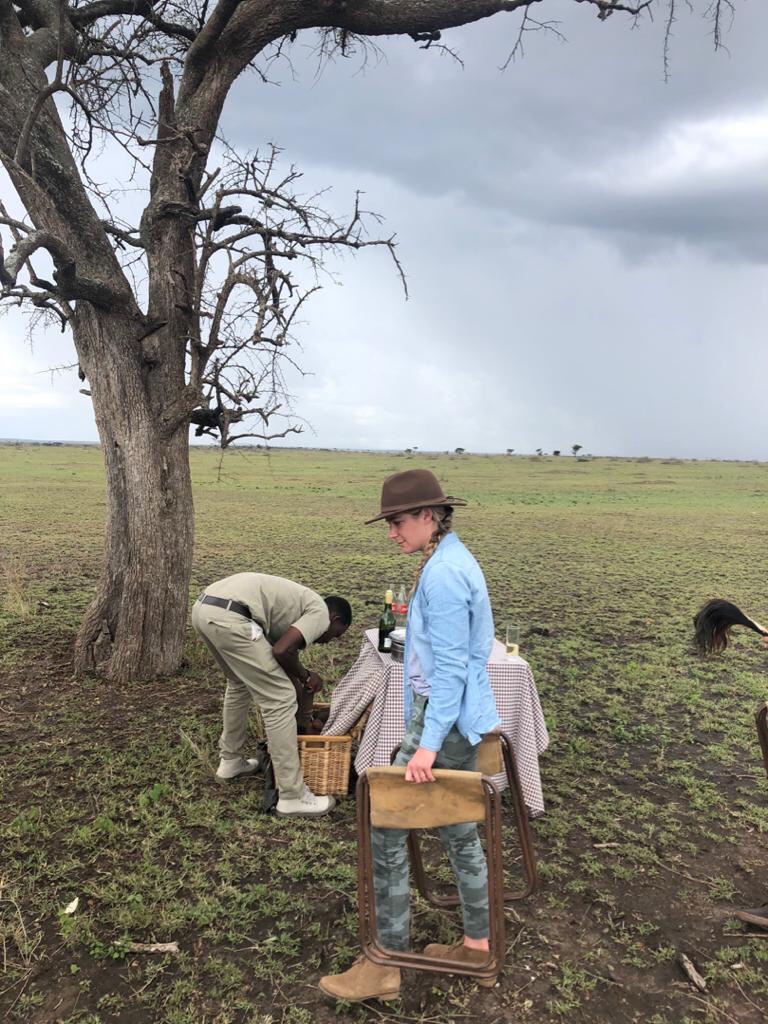
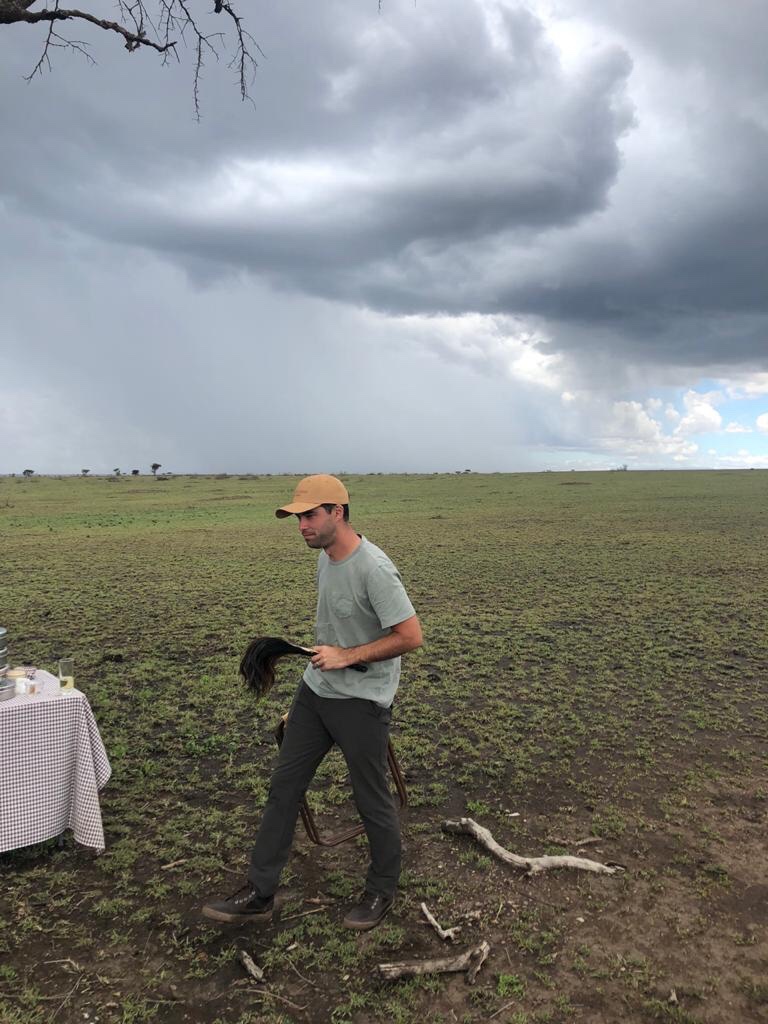
We were ourselves hungry by then , and went in search of a suitable tree . A lonesome Acacia Thorn tree ,with its topiary trimmed by Giraffes served as our sentinel , while we sat down to eat a superb picnic lunch of rotis , fresh salad , beans , fried fish chunks and fruits washed down with a cold drink . In the distance we could see the tommies grazing .
It was just wonderful .
After lunch , we drove further to meet up with another land cruiser , which had two more guests who were going to join us . Molly and Andrew , in their late twenties , by the way of San Francisco joined us . Both in their late twenties , looked carefree and rich . Molly worked at Stanford university while Andrew worked in Salesforce . Thankfully they proved to be amiable , enthusiastic and interested in birds ! That was just apt for us !
As we drove further into the bush we decided to reinvestigate the shy leopard from the day before and the sick Wildebeest ! Guess what , the leopard had killed the Wildebeeste and dragged the carcass into the top of the Kopje ! It had dragged the carcass onto a high rock eyrie from which hyenas or lions would have difficulty in robbing the leopard of its kill . From below, a pair of legs of the dead Wildebeeste were visible , strung over the rock face while the rest of the partially eaten carcass remained hidden . But no sign of the shy leopard ! The Spotted Eagle owl was still there but no signs of the leopard .
After a while we drove past the hippo pool and the Waterbucks and the Marabou tree .
Daniel told us why Hippos yawned and bared its enormous incisors and spread its poo incessantly with its tail . An African legend has it that God created Hippo and the Hippo told God that he wanted to swim in the water given his short stubby legs and enormous body . God said but you will eat up all the fish in the water with your enormous mouth !
The Hippo promised that he would never do that and as a result of his promise , from time to time , the Hippo opens his enormous jaws for all the world to see that there is no fish in his mouth and there is no fish in his poo when he does his business and spreads it around generously !
In general , Hippos we saw spent a lot of their time in collegial pods swimming in smelly pools but sometimes in fresh river streams too . Usually they remain lazy through the day and forage out far and wide on its short stubby legs , late in the vending looking for fresh vegetation to eat .
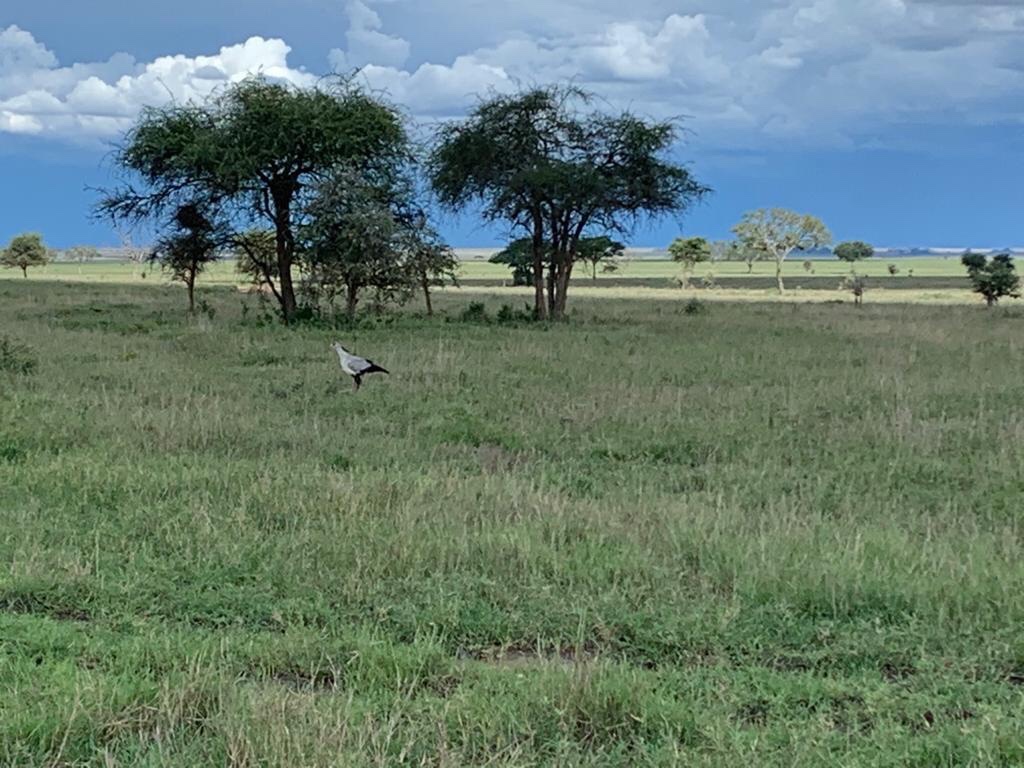
Molly and Andrew wanted to see a Secretary bird in close proximity and sure enough we came across one prancing across the country side on its dainty legs .
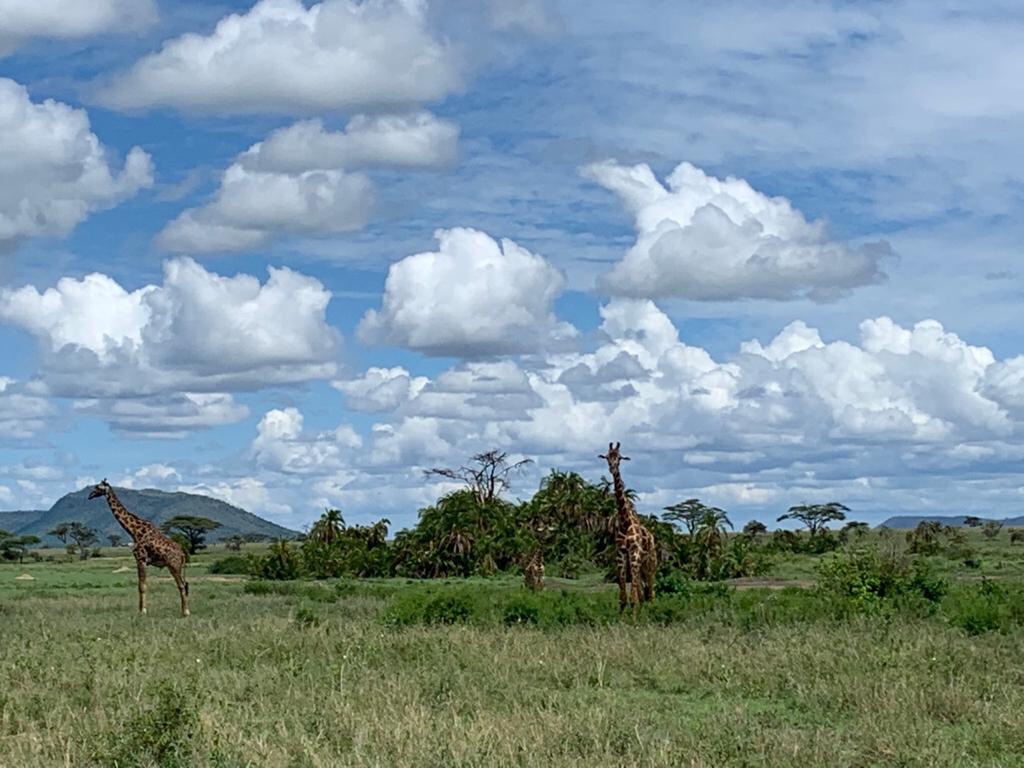
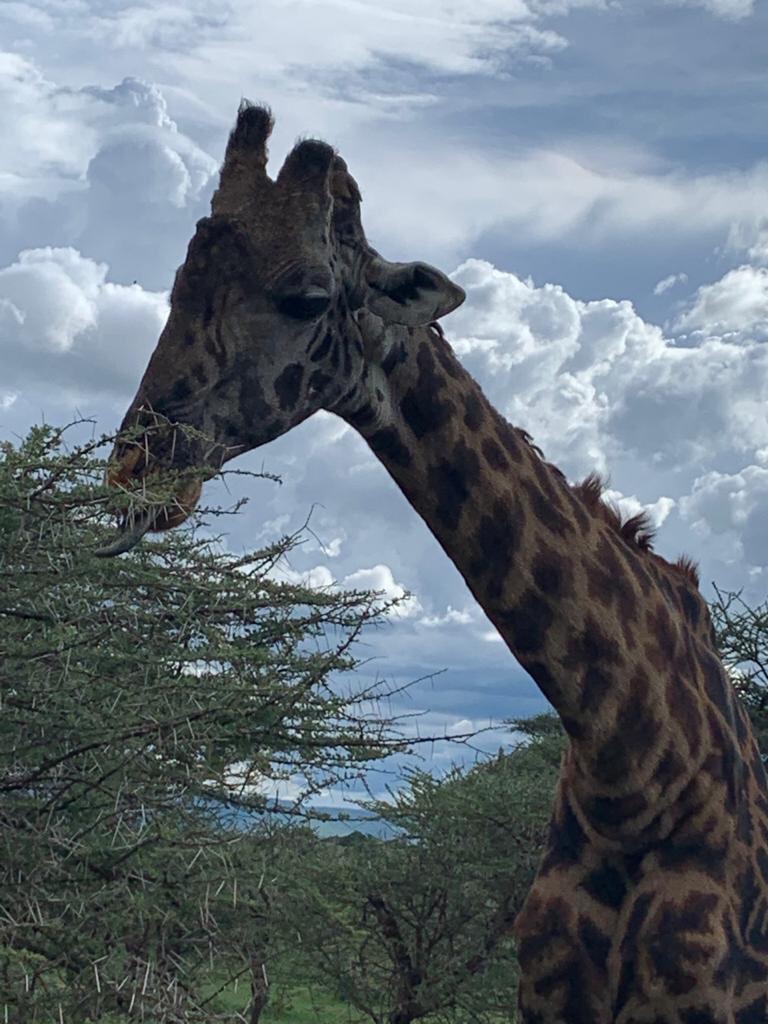
Soon a large herd of Giraffes turned up by the side of the road with many young ones . These Masai Giraffes were a delight to behold . Giraffes can sit down and even lie down but not for long . They have four stomachs and chew the cud . Their strong hard legs can deliver a crippling blow to a lion or any other predator and it uses its long neck as a scything weapon against another rival in battles for mates .
Next to a hippo pool we watched a beautiful African Common Kingfisher and then smaller water birds , such as Greenshanks , Stilts , Sandpipers , apart from beautiful Egyptian geese .
On a an iconic acacia tree out in the planes , we were able to identify about sixteen migrating Lesser Kestrels in one tree ! Africa always have back to you in large numbers !
On the way back I again happened to mention that we had not seen too many elephants through the day . Lo and behold , a herd of elephants appeared alongside a hillside ! Africa always gave us really wonderful surprises !
One of the more interesting conversations we had , as we traveled around the open plains was about how nature treats death . It is eat or be eaten out there . The old and the sick animals get naturally processed . Large predators eat their kills completely . What little is left is finished by scavengers – the hyenas , jackals and vultures and then ants , beetles , flies . Only bleached bones are left which also get dissolved over time and assimilated Into mother earth . This we saw happen over and over again.
I told everybody about the customs amongst the Parsis and the Hindus which raised questions as to how and why . We talked about how Vultures had played such a large part in our eco system since time immemorial .
I then suggested that when I get ready to die , I would come to Africa along with my close friends , then throw a big party . Thereafter take off all my clothes , take a painkiller or something to put me to sleep and then be given away to the Lions . Thus I would become a part of the most powerful beast in the world and be a part of Nature’s endless cycle !
There was much consternation all round ! Daniel kind of declined to do this service for me and Huvida told me in a suppressed whisper that I should change the subject !
We meandered our way back slowly , stopping to see many more birds and mammals on the way .
On the way back , Daniel stopped the vehicle . We all tripped out and he showed us ants called Matabele Ants .
The Wiki entry reads :
] They are a strictly termite-eating (termitophagous) ponerine ant species widely distributed in Sub-Saharan Africa[2] and most commonly known for their column-like raiding formation when attacking termite feeding sites. Their sophisticated raiding behaviour gave them the common name Matabele ant after the Matabele tribe, fierce warriors who overwhelmed various other tribes during the 1800s.[3] At nearly 20 millimetres (0.79 in) in length, M. analis is one of the world’s largest ants.[4][5]
Megaponera analis
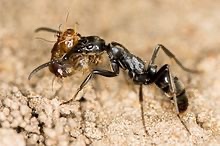
A major worker with termite prey
Sure enough these Matabele ants were raiding a termites nest , literally dragging them out of their mounds and carrying them off . It was wonderful to see the world on a different scale , a microcosm which yet represented another universe !
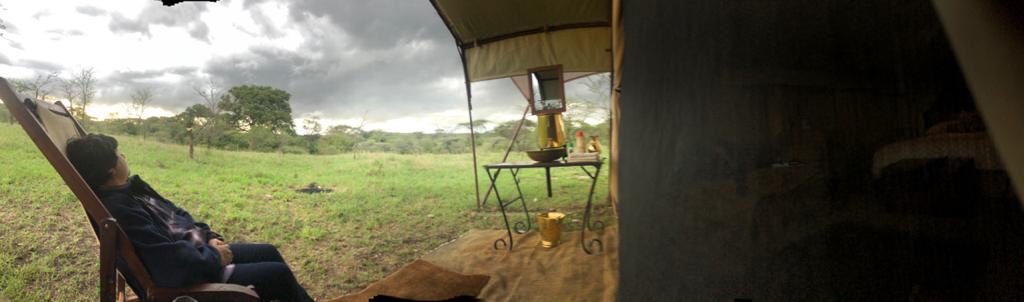
Having reached the camp to another warm welcome , we reached our tent . Hot water in the canvas bags had already been filled . So a nice luxurious hot bath alfresco was the order of the day .
We went back to the reception tent escorted by Enok and saw that a nice camp fire was happening . A couple of nice single malts and the conversation started flowing around the campfire . Because of the little rain in the evening , dinner was had by the light of Kerosene Lanterns hanging on the corners of the tent . The dinner was just right with a soup and main course of fish and beef . It was very nice .
We went off to sleep with the sound of hyenas and distant roar of lions and occasional baboon quarrels .
In the middle of the night I was woken up the sound of a hippo foraging for grass quite close to the tent . Thrilling !
 Travels with Huvi et Tufan